Cemeteries
509.146 cemeteries worldwide. Search the map, filter by country or browse the list.

Cimitir Municipal Brasov
📍 Braşov, Municipiul Codlea, Romania
Cimitir Municipal Brasov
3139 defuncți →

Cmentarz Wojskowy na Powązkach
📍 Warszawa, Polonia
Powązki Military Cemetery (Polish pronunciation: [pɔˈvɔ̃skʲi]; Polish: Cmentarz Wojskowy na Powązkach) is an old military cemetery located in the Żoliborz district, western part of Warsaw, Poland. The cemetery is often confused with the older Powązki Cemetery, known colloquially as "Old Powązki". The Old Powązki cemetery is located to the south-east of the military cemetery. The military cemetery holds the graves of many who have fought and died for their country since the early 19th century, including a large number involved in the 1920 Battle of Warsaw, the September 1939 Campaign, and the 1944 Warsaw Uprising against Nazi Germany.
3129 defuncți →
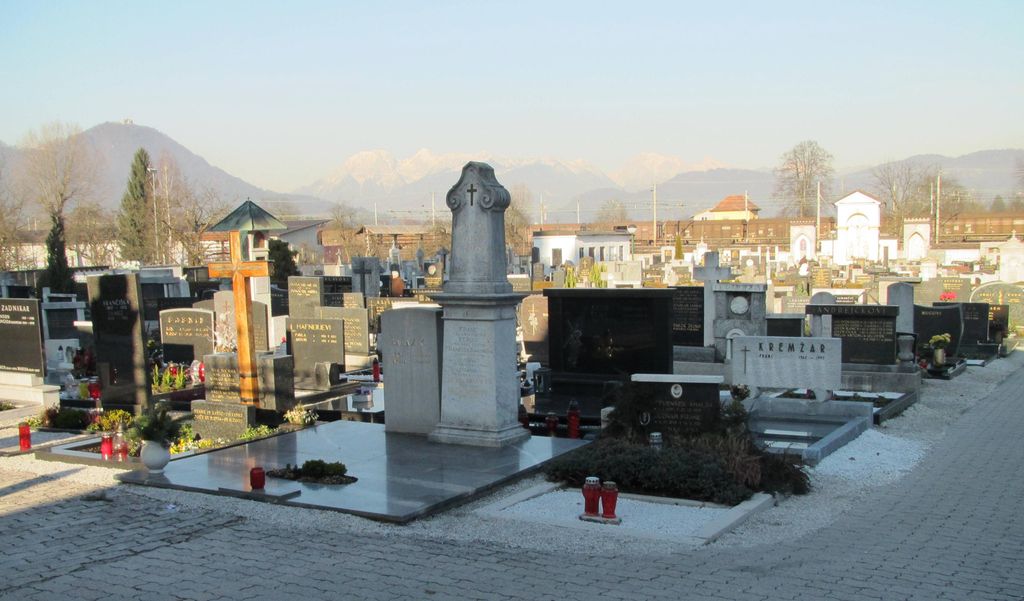
Ljubljana - Šentvid
📍 Dvor, Slovenia
Ljubljana - Šentvid
2736 defuncți →
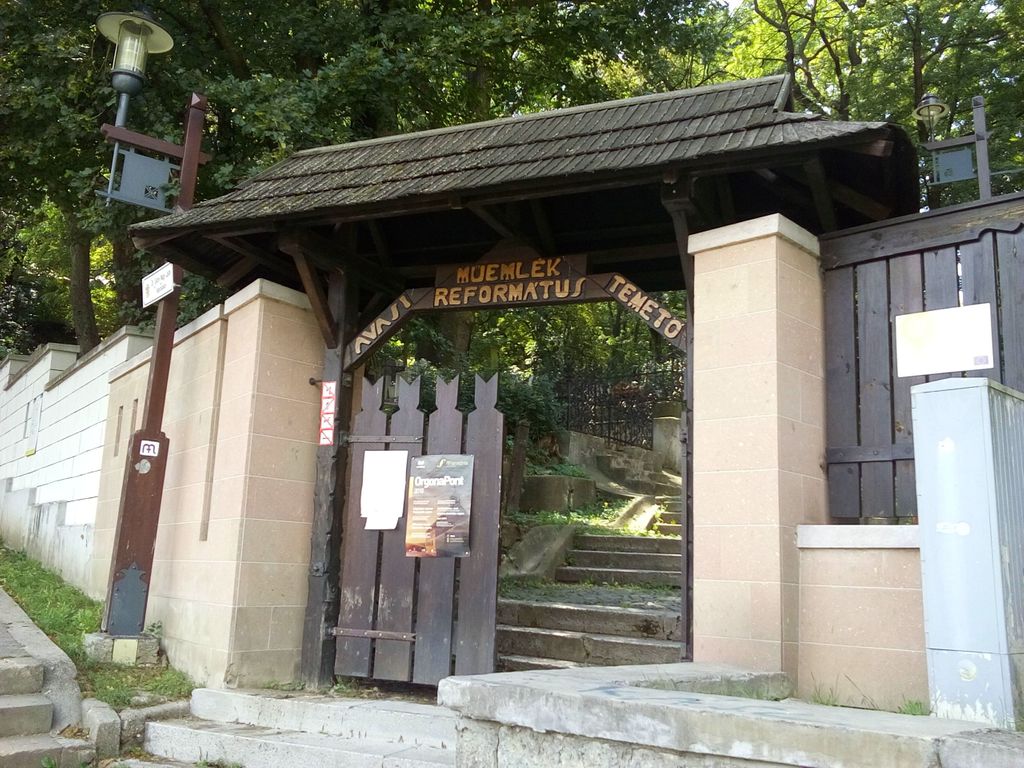
Avasi Reformed Cemetery
📍 Miskolc, Miskolci járás, Hungary
Avasi Reformed Cemetery
2718 defuncți →

St. Theresa of Avila Catholic Church Cemetery
📍 Ravna Gora, Croația
St. Theresa of Avila Catholic Church Cemetery is located in Ravna Gora, Croatia.
2593 defuncți →

Ústřední hřbitov
📍 Moravany, Cehia
Brno Central Cemetery (alternatively called Central Cemetery of Brno; Czech: Ústřední hřbitov (v Brně)) is a graveyard in Brno, Czech Republic. It is the second largest cemetery in the Czech Republic with an area of 43.3 ha (107 acres). It was opened in 1883.
2557 defuncți →

Baja Cemetery
📍 Baja, Bajai járás, Hungary
Baja Cemetery
2514 defuncți →
Jasenovac Concentration Camp
📍 Jasenovac, Croația
Located 62 miles south of Zagreb, Croatia, Jasenovac was Croatia's largest concentration (sabirni logor) and extermination camp. Jasenovac was a network of several sub-camps, established in August, 1941 and operative until April, 1945. The Germans gave control of Jasenovac to the Croatian people, which was run by the fascist, antisemitic, and terrorist Ustasa movement. A large number of Ustasa members served in the camp, most notably Miroslav Filipovic-Majstorovic, who was notorious for killing prisoners with his bare hands. The National Committee of Croatia for the investigation of the crimes of the occupation forces and their collaborators stated in its report of November 15, 1945 that 500,000-600,000 people were killed at Jasenovac. Conditions in the Jasenovac camps were horrific. Prisoners were starved and shelter and sanitary facilities were non-existent. The guards cruelly tortured, terrorized, and murdered prisoners at will.
2336 defuncți →
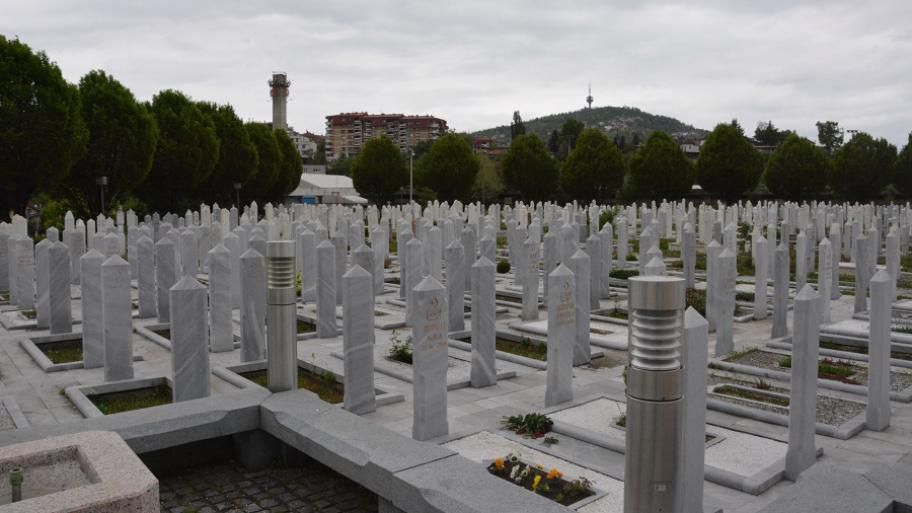
Gradsko mezarje Stadion
📍 Sarajevo, Bosnia and Herzegovina
Gradsko mezarje Stadion
2193 defuncți →
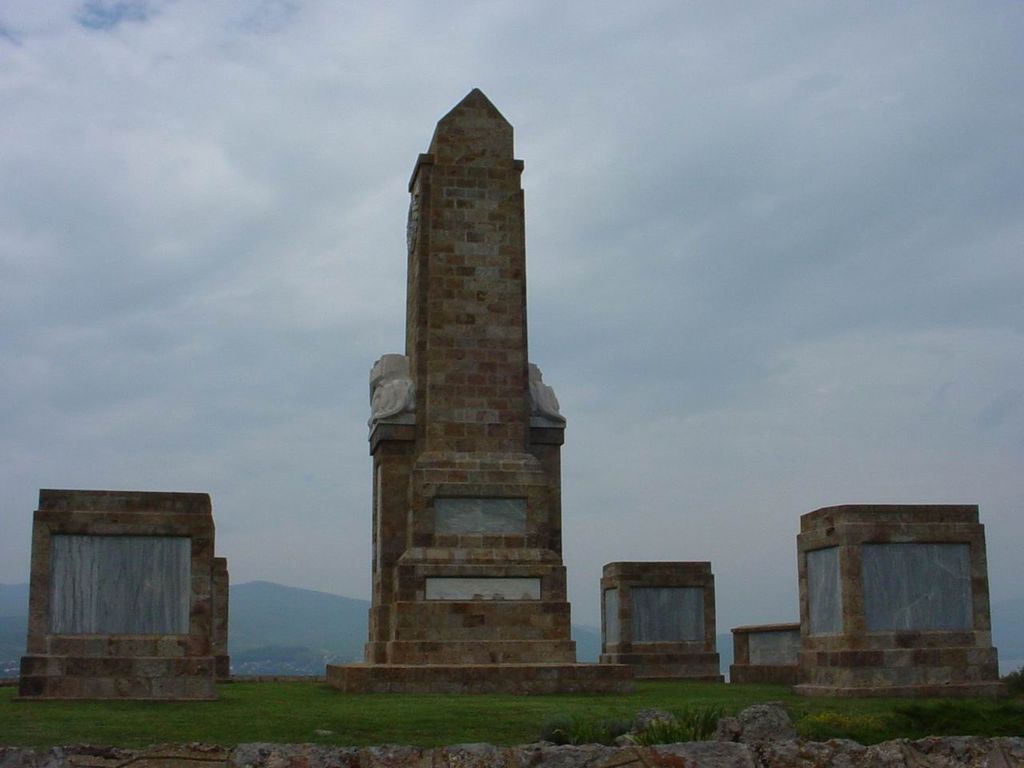
Doiran Memorial
📍 Δοϊράνη, Grecia
The Doiran Memorial stands near Doiran Military Cemetery, which is situated in the north of Greece close to the Macedonia border and near the south-east shore of Lake Doiran. It is approximately 3 kilometres north west of Drossato village behind and to the west of Doirani village and is reached via a farm track. From Thessaloniki take the Thessaloniki – Kilkis National Road north for approximately 70 km following the directions for the town of Kilkis until you come to a crossroads with the town of Drossato on your right. Turn left at this crossroads following the signs for Doirani Village/Lake and Customs. Continue on this road for approximately 2 km where you shall pick up the CWGC signs on the outskirts of the village that shall lead you around the village of Doirani and to Doiran Military cemetery. Continue past the cemetery for approximately 1 km following the CWGC signs up a rough track until you arrive at the Memorial. The Memorial stands on what was called Colonial Hill, and can be seen from a distance and is a landmark. The DOIRAN MEMORIAL stands roughly in the centre of the line occupied for two years by the Allies in Macedonia, but close to the western end, which was held by Commonwealth forces. It marks the scene of the fierce fighting of 1917-1918, which caused the majority of the Commonwealth battle casualties. From October 1915 to the end of November 1918, the British Salonika Force suffered some 2,800 deaths in action, 1,400 from wounds and 4,200 from sickness. The campaign afforded few successes for the Allies, and none of any importance until the last two months. The action of the Commonwealth force was hampered throughout by widespread and unavoidable sickness and by continual diplomatic and personal differences with neutrals or Allies. On one front there was a wide malarial river valley and on the other, difficult mountain ranges, and many of the roads and railways it required had to be specially constructed. The memorial serves the dual purpose of Battle Memorial of the British Salonika Force (for which a large sum of money was subscribed by the officers and men of that force), and place of commemoration for more than 2,000 Commonwealth servicemen who died in Macedonia and whose graves are not known. The memorial was designed by Sir Robert Lorimer with sculpture by Walter Gilbert. It was unveiled by Sir George Macdonogh on 25 September 1926. The memorial stands near DOIRAN MILITARY CEMETERY. The cemetery (originally known as Colonial Hill Cemetery No.2) was formed at the end of 1916 as a cemetery for the Doiran front. The graves are almost entirely those of officers and men of the 22nd and 26th Divisions and largely reflect the fighting of April and May 1917 (the attacks on the Petit-Couronne), and 18-19 September 1918 (the attacks on Pip Ridge and the Grand-Couronne). In October and November 1918, after the final advance, a few burials were added by the 25th Casualty Clearing Station. After the Armistice, graves were brought into the cemetery from the battlefields and from some small burial grounds, the most important of which was Strumnitza British Military Cemetery, north-west of Doiran, made by the 40th Casualty Clearing Station in October and November 1918. The cemetery now contains 1,338 Commonwealth burials of the First World War, 449 of them unidentified. There are also 45 Greek and one French war graves.
2167 defuncți →
Kruschiwl Concentration Camp
📍 Kruševlje, Zapadnobački okrug, Serbia
Established as a concentration camp for ethnic Germans (Donauschwabens) between March 1945 to December 10, 1947. Those imprisoned and killed by the Soviets were those deemed unfit to work in the rest of West/North Batschka. Over 7,000 were interred, and 3,000 to 3,500 were killed. The main causes of death were starvation, typhus & dysentery.
2164 defuncți →

Mikra British Cemetery
📍 Πανόραμα, Grecia
Mikra British Cemetery is situated approximately 8 kilometres south of Thessaloniki, in the municipality of Kalamaria (behind the army camp of Ntalipi). Access is via the main entrance on Vryoylon Street, directly opposite the communal cemetery of Kalamaria. At the invitation of the Greek Prime Minister, M.Venizelos, Salonika (now Thessalonika) was occupied by three French Divisions and the 10th (Irish) Division from Gallipoli in October 1915. Other French and Commonwealth forces landed during the year and in the summer of 1916, they were joined by Russian and Italian troops. In August 1916, a Greek revolution broke out at Salonika, with the result that the Greek national army came into the war on the Allied side. The town was the base of the British Salonika Force and it contained, from time to time, eighteen general and stationary hospitals. Three of these hospitals were Canadian, although there were no other Canadian units in the force. The earliest Commonwealth burials took place in the local Protestant and Roman Catholic cemeteries, and the Anglo-French (now Lembet Road) Military Cemetery was used from November 1915 to October 1918. The British cemetery at Mikra was opened in April 1917, remaining in use until 1920. The cemetery was greatly enlarged after the Armistice when graves were brought in from a number of burial grounds in the area. MIKRA BRITISH CEMETERY now contains 1,810 Commonwealth burials of the First World War, as well as 147 war graves of other nationalities. Within the cemetery will be found the MIKRA MEMORIAL, commemorating almost 500 nurses, officers and men of the Commonwealth forces who died when troop transports and hospital ships were lost in the Mediterranean, and who have no grave but the sea. They are commemorated here because others who went down in the same vessels were washed ashore and identified, and are now buried at Thessalonika. (text used with kind permission of CWGC)
1968 defuncți →
Molidorf Concentration Camp
📍 Александрово, Serbia
Molidorf concentration camp was located in the town known as Molin, within the western part of Nova Crnja Municipality, Vojvodina, Serbia, currently known as Molinska šuma (Forest of Molin) due to the overgrown vegetation that followed the abandonment from the village. In 1956 when a flood devastated the area, all the remaining residents moved to nearby villages the following year. This camp was established in September 1945 and was closed around May 1947, where 5000-7000 people were interned in this camp of which approximately 3000 people (2,012 of them documented by name) died due to starvation, mistreatment and executions by the partisans during the communist government led by Josip Tito after the German army was defeated in World War II. On July 11, 2008, a monument was erected inside the old cemetery of Molin, Vojvodina, Serbia. The Catholic priest from the nearby village of Toba held a ceremony in honor of the victims, the memorial has inscriptions in English, German, Hungarian and Serbian to remember the German population that it existed from 1833-1947. The official Danube-Swabian Totenbuchs, listing the names of the deceased who died in major camps in the Banat region, are available online, from which the names who have been verified to have died at Molidorf Camp, have been uploaded to Find a Grave.
1961 defuncți →

Groblje Resnik
📍 Ivanja Reka, Croația
Groblje Resnik
1956 defuncți →

Kaštel Sućurac - Gospe na Hladi
📍 Kaštel Sućurac, Croația
Svetište Gospe na Hladi, na današnjemu groblju, sagrađeno je g. 1393. godine.Crkva se nalazila u blizini turske granice pa je više puta stradala od Turaka.»Štoviše, mještani nisu smjeli na crkvu staviti vrata i zatvoriti je jer to nisu dopuštali Turci, izvješćuje apostolski pohoditelj Augustin Priuli g.1603. U njojse i u to doba nalazila, poviše oltara, stara Gospina slika iz 14. ili 15. stoljeća, apripada italo-kretskoj školi. Na zidovima svetišta izloženi su mnogi zavjetnidarovi što su ih Gospi darovali njezini zahvalni štovatelji. Mletački pisac i kroničar Flaminio Cornaro u svojoj kronici 1761. navodi svetište 'Sućuračke Gospe' navodi među najglasovitijim Gospinim svetištima u Mletačkoj Republici. 1775. papa Pio VI. bulom dodjeljuje milost povlaštenoga oltara Gospinu svetištu. Ovdje se održavaju velika hodočašća za blagdan Velike Gospe i sv.Roka, sv. Klementa i sv. Ivana Nepomuka
1909 defuncți →

Mrkopalj
📍 Mrkopalj, Croația
Mrkopalj is a town in the mountainous part of Croatia in the region of Gorski kotar, located south of Delnice and some 50 km east of Rijeka. It has 1,407 inhabitants, absolute majority are Croats.
1895 defuncți →

Olšanské hřbitovy
📍 Praha, Cehia
The New Jewish Cemetery (Czech: Nový židovský hřbitov) in Žižkov, Prague, Czech Republic, was established in 1890 to relieve the space problem at the Old Jewish cemetery in Žižkov, where the Žižkov Television Tower now stands. As of 1964 it is declared as a cultural monument.
1867 defuncți →

Cmentarz Rakowicki
📍 Kraków, Polonia
Rakowicki Cemetery (Polish: Cmentarz Rakowicki [ˈt͡smɛntaʂ rakɔˈvit͡skʲi]) is a historic necropolis and a cultural heritage monument located at 26 Rakowicka Street in Warszawskie, the former district of Kraków, Poland. Founded at the beginning of the 19th century when the region was part of Austrian Galicia, the cemetery was expanded several times, and at present covers an area of about 42 ha (100 acres). Many notable Cracovians are buried here.
1856 defuncți →
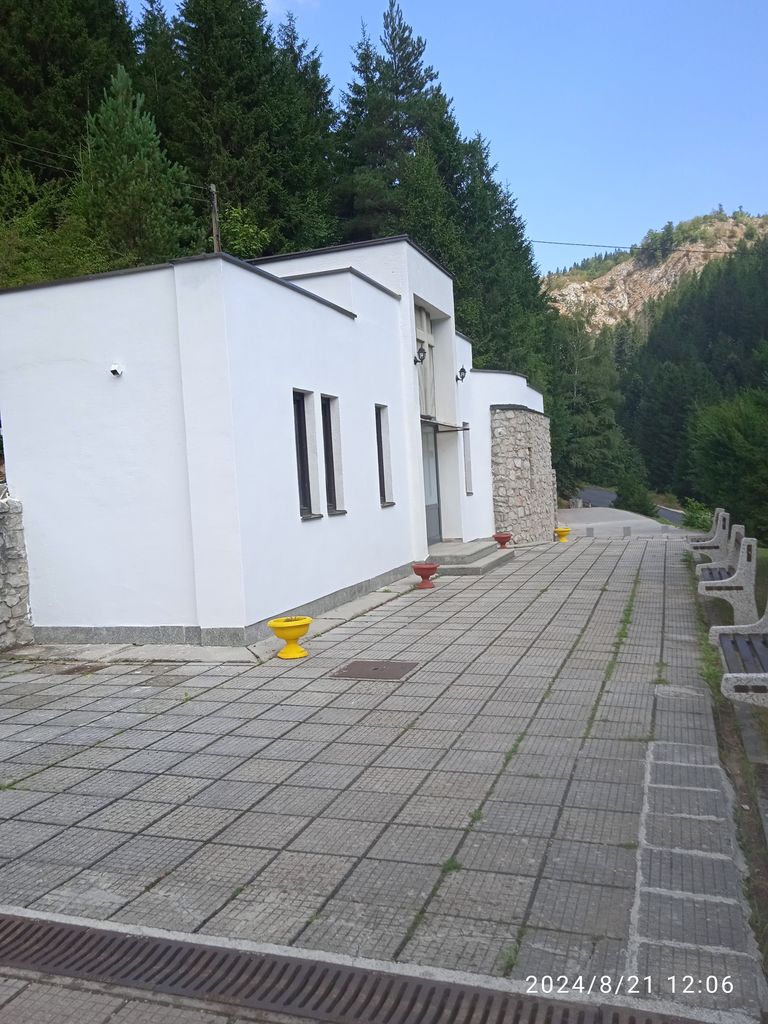
Vares
📍 Vares, Bosnia and Herzegovina
Vares
1852 defuncți →

Kriegsgräberstätte Split
📍 Kamen, Croația
Kriegsgräberstätte Split
1809 defuncți →
Mausoleum of Romanian Heroes
📍 Mărășești, Oraş Mãrãşeşti, Romania
Mausoleum dedicated to veterans from Romania.
1779 defuncți →

Salonika Lembet Road Military Cemetery
📍 Θεσσαλονίκη, Grecia
The Cemetery is on the northern outskirts of Thessalonika, it lies on the west side of the road to Serres, Langada Street, adjoining the Roman Catholic, French and Italian War Cemeteries. At the invitation of the Greek Prime Minister, M.Venizelos, Salonika (now Thessalonika) was occupied by three French Divisions and the 10th (Irish) Division from Gallipoli in October 1915. Other French and Commonwealth forces landed during the year and in the summer of 1916, they were joined by Russian and Italian troops. In August 1916, a Greek revolution broke out at Salonika, with the result that the Greek national army came into the war on the Allied side. The town was the base of the British Salonika Force and it contained, from time to time, eighteen general and stationary hospitals. Three of these hospitals were Canadian, although there were no other Canadian units in the force. The earliest Commonwealth burials took place in the local Protestant and Roman Catholic cemeteries. Salonika (Lembet Road) Military Cemetery (formerly known as the Anglo-French Military Cemetery) was begun in November 1915 and Commonwealth, French, Serbian, Italian and Russian sections were formed. The Commonwealth section remained in use until October 1918, although from the beginning of 1917, burials were also made in Mikra British Cemetery. After the Armistice, some graves were brought in from other cemeteries in Macedonia, Albania and from Scala Cemetery, near Cassivita, on the island of Thasos. There are now 1,648 Commonwealth servicemen of the First World War buried or commemorated in this cemetery. The Commonwealth plot also contains 45 Bulgarian and one Serbian war graves.
1704 defuncți →

Vinohradský hřbitov
📍 Praha, Cehia
Cimitirul Vinohrady (în cehă Vinohradský hřbitov) este un cimitir mare din Vinohrady(d), Praga 10, în care se află crematoriul Strašnice. Este al doilea cimitir ca mărime din Praga și este înregistrat în lista monumentelor culturale de stat. Rămășițele a doi președinți ai Cehiei se află în acest cimitir.
1600 defuncți →
Delnice Groblje (municipal cemetery)
📍 Delnice, Grad Delnice, Croatia
Delnice Groblje (municipal cemetery)
1595 defuncți →