Cemeteries
509.146 cemeteries worldwide. Search the map, filter by country or browse the list.

Jewish Cemetery
📍 Petresti, România
The Jewish Cemetery in Focsani, still functioning today, is on the way to the small forest. It was established in 1874. More than 3245 dead are buried in 50 rows of single and family graves for two, three or four dead. Eathquakes have damaged many of the tombstones. The tombstone inscriptions may be in German, Hebrew, and/or Romanian. The newer generations of the Jewish Community are buried in this cemetery. There are a few ancient tombstones, over 120 years old. A monument has been erected at the gates of the cemetery to honor the Jewish heroes who died in action in World War I.
1007 defuncți →

Basilica of St. Mary Major
📍 Rome, Città Metropolitana di Roma Capitale, Italy
Basilica of St. Mary Major
975 defuncți →

Cvetkovic
📍 Cvetković, Croația
Cvetkovic
956 defuncți →

Gornje Prekrizje
📍 Gornje Prekrizje, Općina Krašić, Croatia
Gornje Prekrizje
944 defuncți →
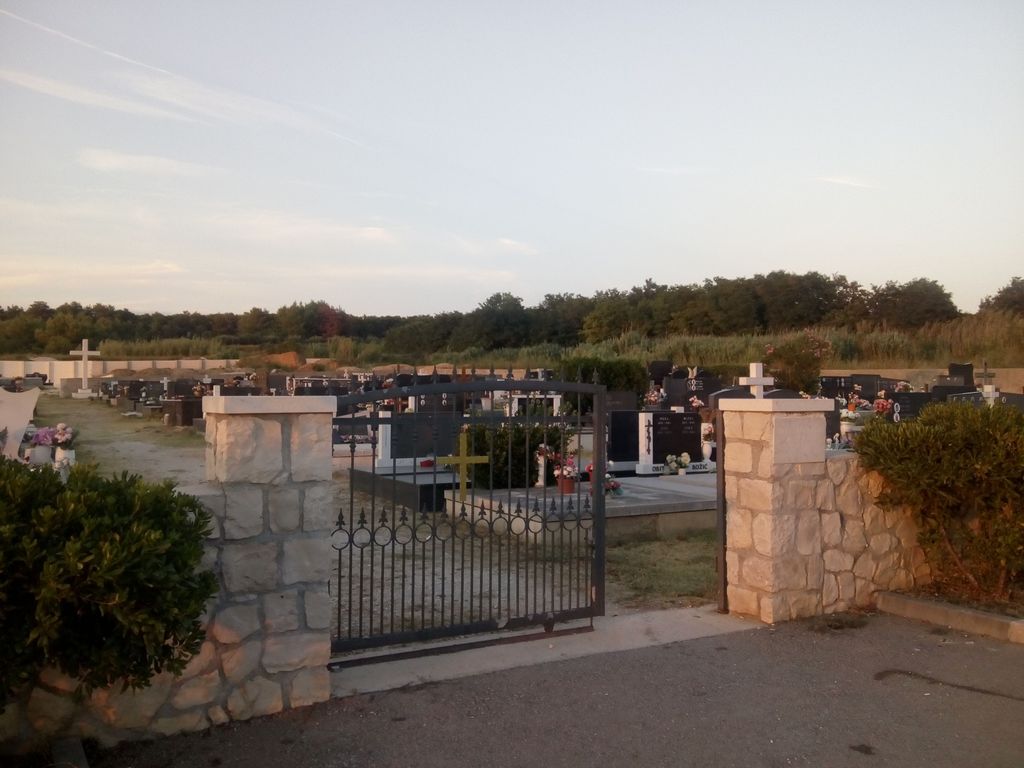
Groblje Vrsi
📍 Vrsi, Croația
Groblje Vrsi
935 defuncți →

Old Jewish Cemetery of Athens
📍 Αθήνα, Grecia
Athens Jewish Community Project - 2021-2022 All names are catalogued using Greek alphabet. For higher resolution photos and/or tombstone information in English, please sent your request via email at alvent98@gmail.com This cemetery is also uploaded (with photos for each tombstone too) at: https://billiongraves.com/cemetery/Old-Jewish-Cemetery-of-Athens---%CE%A0%CE%B1%CE%BB%CE%B1%CE%B9%CF%8C-%CE%95%CE%B2%CF%81%CE%B1%CF%8A%CE%BA%CF%8C-%CE%9D%CE%B5%CE%BA%CF%81%CE%BF%CF%84%CE%B1%CF%86%CE%B5%CE%AF%CE%BF-%CE%91%CE%B8%CE%B7%CE%BD%CF%8E%CE%BD/333779 Number of existing gravestones: 926 Date of oldest tombstone: 1886 Date of newest tombstone: 2012 See also: https://www.esjf-surveys.org/survey/athens-first-municipal-cemetery-jewish-section/ Among other information recorded on tombstones, the place of birth is recorded for many of the deceased. These are the places of birth recorded: Arta - Athens - Chalkida - Chania - Chios - Didimoteicho (Dimotika) - Ioannina (Jannina) - Irakleion, Crete - Kastoria - Kavala - Kefalonia - Kerkyra (Corfu) - Komotini - Kos - Larisa - Preveza - Rodos - Serres - Thermia, Kythnos island - Thessaloniki (Salonique) - Trikala - Volos - Xanthi - Zakynthos (Zante) - Hebron - Istanbul - Smyrne (Izmir, Turkey) - Menemeni (Menemen,Turkey) - Adrianoupoli (Edirne, Turkey) - Nazili (Aydin Province, Turkey) - Milas (Turkey) - Riga (Latvia) - Odessa - Monastiri (Bitola, N. Macedonia) - Rustchuk (Ruse, Bulgaria) - Delvine (Albania) - Alexandria (Egypt) - Milan (Italy) - Malta - Kolemea (Kolomyya, Ukraine) - Kaposvar (Hungary) - Czernowitz (Chernivtsi, Ukraine) - Carlsbad (Germany) - Wien (Austria)
932 defuncți →

Личаківський цвинтар
📍 Львів, Ucraina
The Lychakiv Cemetery (Ukrainian: Личаківський цвинтар, romanized: Lychakivskyi tsvyntar; Polish: Cmentarz Łyczakowski we Lwowie), officially titled State History and Culture Museum-Reserve "Lychakiv Cemetery" (Ukrainian: Державний історико-культурний музей-заповідник «Личаківський цвинтар»), is a historic cemetery in Lviv, Ukraine.
927 defuncți →

Sveta Klara
📍 Gornji Čehi, Croația
Sveta Klara
920 defuncți →

Struma Military Cemetery
📍 Καλόκαστρο, Grecia
Struma Military Cemetery
903 defuncți →
Plot of Heroes
📍 Craiova, Municipiul Craiova, Romania
Cemetery dedicated to veterans from Romania in Craiova.
901 defuncți →
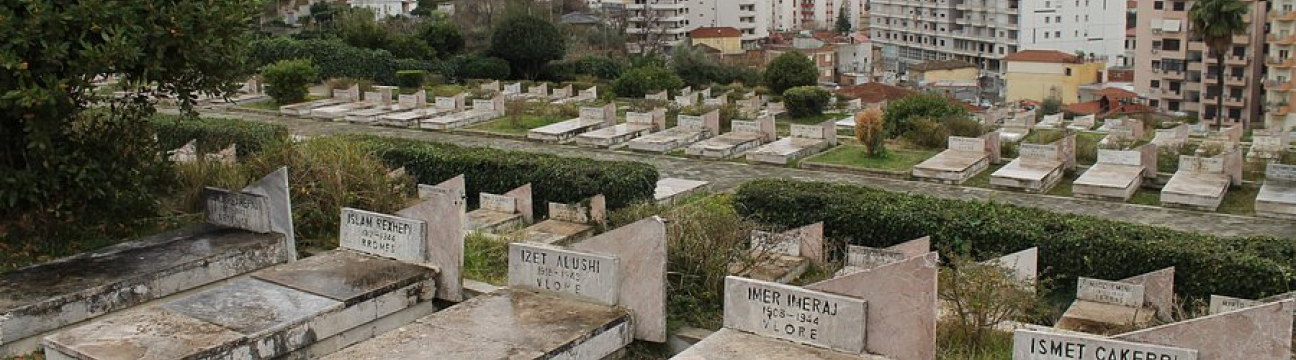
Vlorë Cemetery
📍 Vorë, Vlorë Municipality, Albania
Many of the gravestones for babies were small with the information painted and weathering. 28 March 1997 An old boat Otranto became overloaded with passengers probably trying to get away from the civil unrest happening in the country. The boat sunk; its remains were pulled up much later. These are probably just memorial stones; they're in a beautiful part of the cemetery.
898 defuncți →
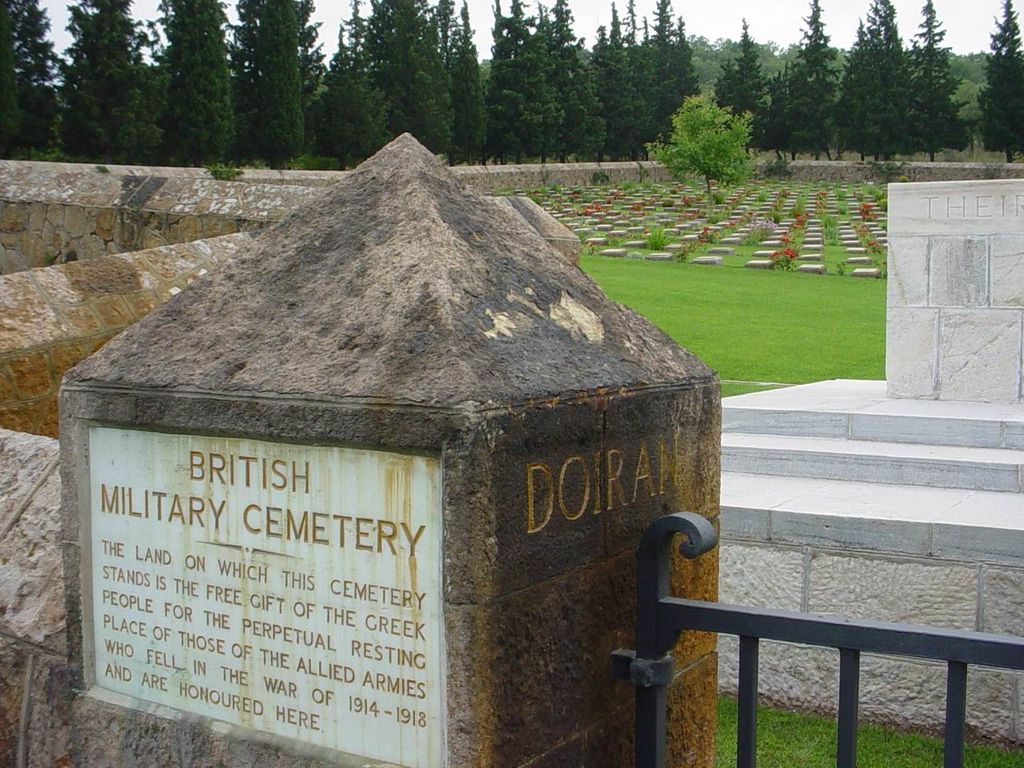
Doiran Military Cemetery
📍 Δοϊράνη, Grecia
Doiran Military Cemetery is situated in the north of Greece close to the Macedonia border and near the south-east shore of Lake Doiran. It is approximately 2 kilometres north west of Drossato village behind and to the west of Doirani village and is reached via a farm track. From Thessaloniki take the Thessaloniki – Kilkis National Road north for approximately 70 km following the directions for the town of Kilkis until you come to a crossroads with the town of Drossato on your right. Turn left at this crossroad following the signs for Doirani Village/Lake and Customs. Continue on this road for approximately 2 km where you shall pick up the CWGC signs on the outskirts of the village that shall lead you around the village of Doirani and to the cemetery. The Doiran Memorial, is on what was called Colonial Hill, it can be seen from a distance and is clearly signposted. The cemetery (originally known as Colonial Hill Cemetery No.2) was formed at the end of 1916 as a cemetery for the Doiran front. The graves are almost entirely those of officers and men of the 22nd and 26th Divisions and largely reflect the fighting of April and May 1917 (the attacks on the Petit-Couronne), and 18-19 September 1918 (the attacks on Pip Ridge and the Grand-Couronne). In October and November 1918, after the final advance, a few burials took place from the 25th Casualty Clearing Station. After the Armistice, graves were brought into the cemetery from the battlefields and from by some small burial grounds, the most important of which was Strumnitza British Military Cemetery, north-west of Doiran, made by the 40th Casualty Clearing Station in October and November 1918. DOIRAN MILITARY CEMETERY now contains 1,338 Commonwealth burials of the First World War, 449 of them unidentified. There are also one French and 45 Greek war graves. The DOIRAN MEMORIAL, which stands near the cemetery, serves the dual purpose of Battle Memorial of the British Salonika Force (for which a large sum of money was subscribed by the officers and men of that force), and place of commemoration for more than 2,000 Commonwealth servicemen who died in Macedonia and whose graves are not known. The memorial was designed by Sir Robert Lorimer with sculpture by Walter Gilbert.
897 defuncți →

Krivi Put
📍 Krivi Put, Grad Senj, Croatia
Gospa Snježna Catholic Church Krivi Put, Croatia
875 defuncți →

Cimitir Brno
📍 Brno, Cehia
841 defuncți →

French Military Cemetery
📍 Скопје, Macedonia de Nord
Formed in 1926, in the French military cemetery in Skopje the remains of 2,930 French soldiers were buried, of which only 930 have name. Many of the soldiers originate from the French colonial countries like Morocco and Senegal. The graves are divided into two larger plots with an alley leading to the central monument in the upper part, where there are two general tombs to the left and right. The cemetery is enclosed by a concrete fence and entrance is from the left side near a residential building inhabited by the people who take care for the cemetery. Commemorations at these cemeteries are usually held on July 14 - the national holiday of the Republic of France and November 11, the day when the First World War ended. The French military cemetery is located near the US Embassy in Skopje, above the Kale Sports and Recreation Center.
831 defuncți →
Cimitirul de onoare românesc de la Ţiganca
📍 Cantemir, Moldova
Romanian Cemetery of Honor from Ţiganca (Veterans Cemetery).
830 defuncți →
Heroes Cemetery
📍 Podu Iloaiei, Oraş Podu Iloaiei, Romania
Veterans cemetery. Romanian, German, and Soviet soldiers have been buried at this cemetery.
805 defuncți →
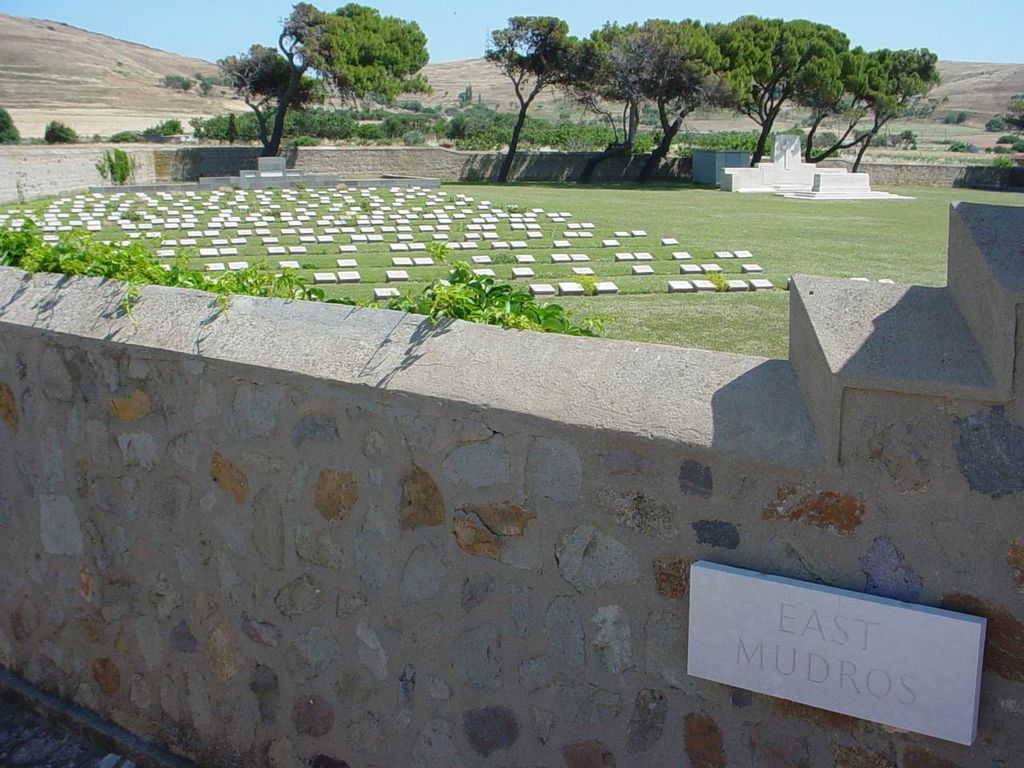
East Mudros Military Cemetery
📍 Μούδρος, Grecia
Mudros was one of the main staging areas for the Gallipoli Campaign. The CWCG website says: "East Mudros Military Cemetery was begun in April 1915 and used until September 1919. It contains 885 Commonwealth burials of the First World War, 86 of them unidentified, and one Second World War burial. There are also seven non-war naval graves and 32 burials of other nationalities in the cemetery, 29 of them Russians who died in the evacuation of Novorossisk in 1921, who are remembered on a memorial plaque set into the boundary wall."
804 defuncți →

Volos New Jewish Cemetery
📍 Νέα Ιωνία, Grecia
698 existing gravestones. The gravestones are marked with numbered stone plates. Around 40 tombstones, dating back from 1866 to 1918, were brought from Volos Old Jewish cemetery. Source: https://www.esjf-surveys.org/survey/volos-new-jewish-cemetery/
783 defuncți →
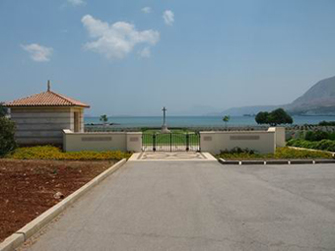
Suda Bay War Cemetery
📍 Σούδα, Grecia
Suda Bay War Cemetery is located approximately 5 km east from the centre of Chania (Xania). From Chania follow the Suda Boulevard road for approximately 4 km until you arrive at the junction of Ellis and then turn left following the signs for the Airport and Vlite. Proceed for around 200 metres along this road until you arrive at the junction of Mavridaki Street. Turn left onto Mavridaki Street and follow this road for 400 metres until you come to the CWGC sign on the right hand side. Proceed for a further 100 metres and turn right at the next CWGC sign. The cemetery is in an olive grove. In May 1941, the Commonwealth force in Crete was organised in five widely separated defence areas along the north coast - around the three airfields at Iraklion, Rethymnon and Maleme, and at Suda Bay and the port of Chania. The Germans launched their attack on 20 May with airborne troops. The airfield at Maleme was quickly captured and used for landing German reinforcements. On 23 May, the remainder of the Maleme position had to be given up and its defenders fell back to Chania. On 26 May, the Allied line west of Chania was broken. Suda Bay became indefensible and the troops from these two positions, with the remainder of the Maleme garrison, withdrew across the island to Sfakion, where many of them were evacuated by sea on the nights of the 28 - 31 May. The airborne attacks on the Iraklion and Rethymnon positions on 20 May were repulsed. Iraklion was successfully defended until the night of 29/29 May when the garrison was evacuated by sea. Orders for the Rethymnon garrison to fight its way southward for evacuation did not arrive, and it was overwhelmed on 31 May. Of the total Commonwealth land force of 32,000 men, 18,000 were evacuated, 12,000 were taken prisoner and 2,000 were killed. The site of Suda Bay War Cemetery was chosen after the war and graves were moved there by 21st and 22nd Australian War Graves Units from the four burial grounds that had been established by the German occupying forces at Chania, Iraklion, Rethymnon and Galata, and from isolated sites and civilian cemeteries. There are now 1,500 Commonwealth servicemen of the Second World War buried or commemorated in the cemetery. 776 of the burials are unidentified but special memorials commemorate a number of casualties believed to be buried among them. The cemetery also contains 19 First World War burials brought in from Suda Bay Consular Cemetery, 1 being unidentified. There are also 7 burials of other nationalities and 37 non-war burials.
780 defuncți →

Cimitirul din Deal
📍 Sighisoara, România
Cimitirul Bisericii EvangheliceCimitirul Sasilor
770 defuncți →

Harem Poplašići
📍 Trnovica, Croația
Muslim cemetery in Stolac.
769 defuncți →

Tomišelj
📍 Tomišelj, Slovenia
Tomišelj
758 defuncți →

Volavje
📍 Volavje, Croația
Volavje
753 defuncți →