
Antoni Chołoniewski a adăugat o fotografie
acum 2 zile
R.I.P
Antoni
Antoni
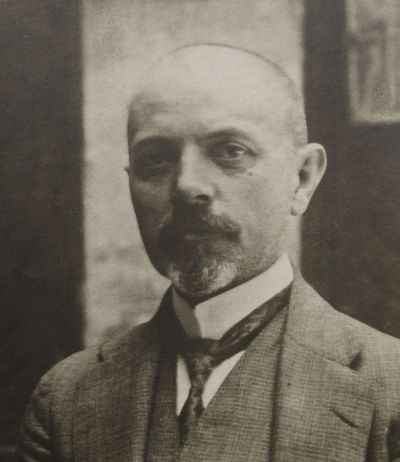
Antoni Chołoniewski–Myszka (1872–1924), was a Polish journalist, publicist and a national activist.
0 comentarii2 vizualizări0 reacții
 🔍 Mărește
In memoriam
Antoni Chołoniewski–Myszka (1872–1924), was a Polish journalist, publicist and a national activist.
Antoni Chołoniewski a adăugat o fotografie
acum 2 zile
Antoni Chołoniewski–Myszka (1872–1924), was a Polish journalist, publicist and a national activist.
Antoni Chołoniewski a adăugat o fotografie
acum 2 zile
Biography Antoni Chołoniewski–Myszka, or Antoni Chołoniewski was born on 23 October 1872 in Kavske, then called Kawsko, near Stryi, now in western Ukraine. His family was from landed nobility, linked to the Korczak clan. His mother was Katarzyna née Hrynkiewicz. His father Ferdinand fought as a lieutenant under General Józef Bem during the Hungarian Revolution of 1848. The property of the Chołoniewski family was confiscated by the Austrian authorities following Ferdinand's participation to this uprising. He attended a gymnasium in Stryi and lost his parents early in his youth. As a consequence, Antoni had to earn early his living by writing; as such, the first texts he penned were articles about the Podkarpacie region to be edited by Lwów newspapers. In 1891, he moved to Lwów and started working in the editorial office of the Przegląd Lwowski, a biweekly scientific, literary and political journal. In 1894, he opted for the editorial office of the Dziennik Polski. There, he took over the department of culture and national affairs while working at the same time as a correspondent for other papers:
Antoni Chołoniewski a adăugat o fotografie
acum 2 zile
Saint Petersburg's Kraj; Kraków's Życie. During this period, he wrote his first book, Nieśmiertelni. Fotografie literatów lwowskich (English: Immortals. Photographs of Lwów writers). Issued in 1898, Antoni described in it the journalistic and literary milieu of the city. In 1902, he released Życiorys Kościuszko (English: Biography of Kościuszko), which was a popular success. In 1903, he relocated to Kraków, where after several stints, he took the position of chief editor of the local print of Warsaw biweekly Świat, just founded in 1906 by Stefan Krzywoszewski (1866–1950). Quickly he turned towards journalism, visiting Silesia, Wielkopolska and Pomerania. In 1909, Chołoniewski visited for the first time Gdańsk: he was sent by the editors of Świat in order to survey the situation of Poles in these regions, so as to confirm the Germanization policy imposed by the authorities. In particular, he was a fervent champion of national Polish identity in the Western Borderlands. From 1913 onwards, he regularly advocated them in several of his publications. Chołoniewski was the first Polish journalist to draw the attention of the Polish public to Gdynia, then a small fishing village. Furthermore, he contributed to the establishment of the first boarding house for Polish holiday goers. He constantly…
Antoni Chołoniewski a adăugat o fotografie
acum 2 zile
Themes and works Defence of the Polish national feeling or "Polishness" in the Western borderlands (eastern ragions of Pomerania, Wielkopolska, Warmia and parts of Upper Silesia). Chołoniewski tackled this topic in his following works: Nad morzem polskim (English: On Polish seaside) 1913; Gdańsk i Pomorze (English: Gdańsk and the Pomerania) 1919, translated into French; Taniec wśród mieczów (English: Dance among swords) 1920. Despite his national orientation, Antoni Chołoniewski was a writer free from any chauvinism and always referred to the most positive and beautiful Polish traditions, such as democracy or tolerance, like in his 1917 masterpiece Duch dziejów Polski. He particularly championed the assimilation of Jews, fighting both Antisemitism and Jewish Autonomism. Highlighting and repairing historical and political struggles involving Polish nationalism. He described this ideas in the following: Istota walki polsko–rosyjskiej (English: The essence of the Polish–Russian struggle) 1916; Dialog o Polsce i małych narodach (English: Dialogue about Poland and small nations) 1916; Państwo polskie, jego wskrzeszenie i widoki rozwoju (English: The Polish state, its resurrection and development views). Chołoniewski's main work, Duch dziejów Polski (English: The Spirit of Polish History), is a treaty on the First Polish Republic, idealising its history so much that it raised criticism of…
Antoni Chołoniewski a adăugat o fotografie
acum 2 zile
Kamilla Chołoniewska, his wife Kamilla Florentyna Maria Chołoniewska, née Głuchowska (1877–1936), was a social activist, writer, journalist, teacher and entrepreneur. During the First World War, she organized help for Polish legionnaires and political prisoners. Later she was active in various women's associations, especially as the president of the "Association of Scientific Assistance for Women", allowing students to study higher education by granting scholarships. While in Bydgoszcz with Antoni, she founded and ran a workshop and a school. As a supporter of women's higher education, she co-founded the first female gymnasium in Lviv. In 1934, she took over the leadership of the "National School of Homework" in Warsaw. Her maternal grandfather was Ludwik Mierosławski (1814–1878): a Polish general, writer, poet, historian and political activist. He took part in the November Uprising, then emigrated to France, before coming back during the 1846 Greater Poland Uprising 1846, where he was taken prisoner. Following an amnesty, he fought in the Palatine uprising in 1849, on the side of the insurgents. After his return to France, he had contacts with Italian activists like Giuseppe Garibaldi. Eventually, he participated in the January Uprising in 1863–1864. Her father was Franciszek Mieczysław Głuchowski (1852–1903), a Polish doctor and…
Antoni Chołoniewski a lăsat un gând
acum 2 zile
Commemorations A commemorative plaque was placed on the facade of the villa he inhabited with his family, while in Bydgoszcz, at 119 Gdańska Street. A street in the Szwederowo district of Bydgoszcz has been also named after him.
Antoni Chołoniewski a lăsat un gând
acum 2 zile
Bibliography (in Polish) Błażejewski Stanisław, Kutta Janusz, Romaniuk Marek (1996). Bydgoski Słownik Biograficzny. Tom III. Bydgoszcz: Wojewódzki Ośrodek Kultury. pp. 50–51. ISBN 8385327320.