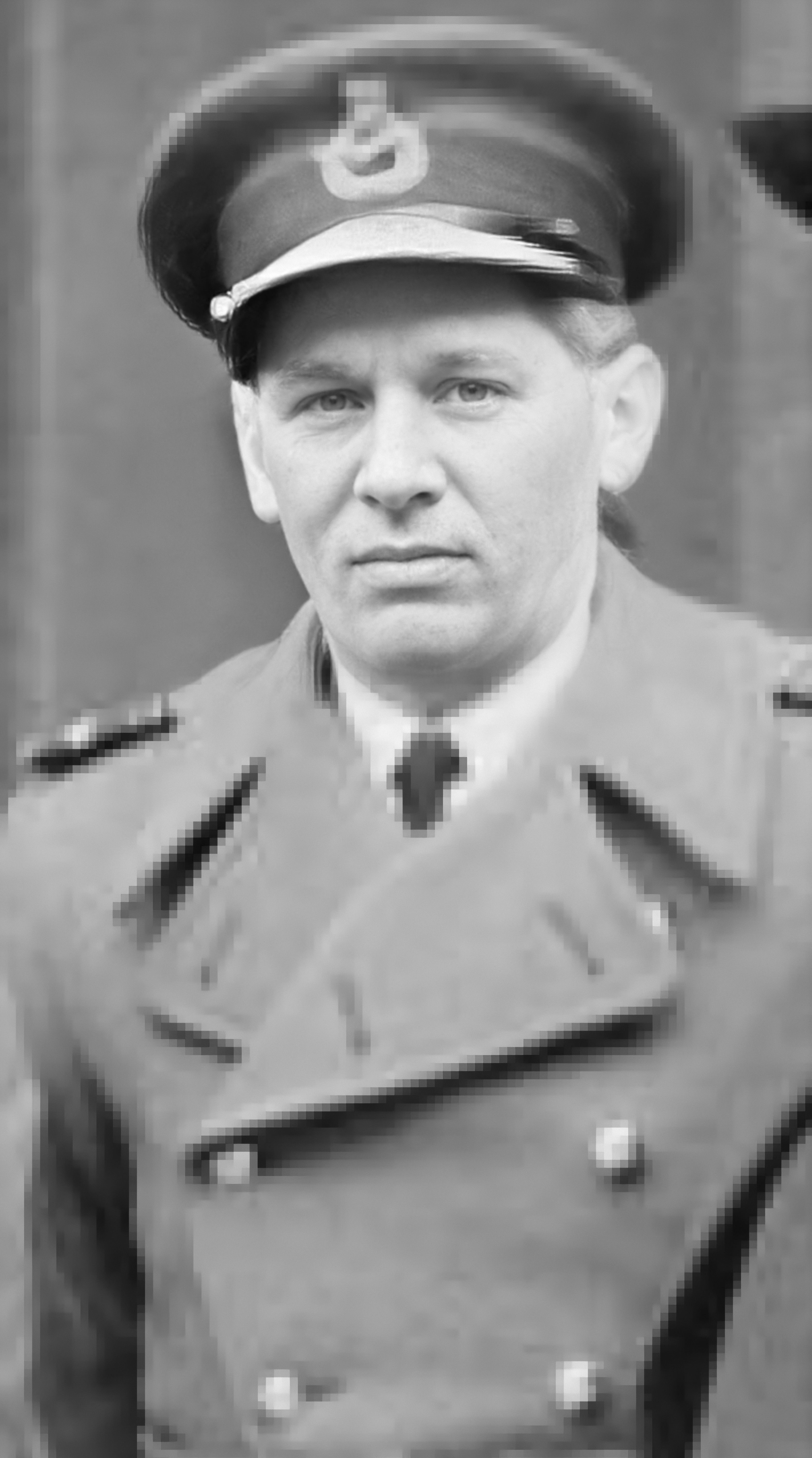
Karel Janoušek, (30 October 1893 – 27 October 1971) was a senior Czechoslovak Air Force officer. He began his career as a soldier, serving in the Austrian Imperial-Royal Landwehr (1915–16), Czechoslovak Legion (1916–20) and Czechoslovak Army (1920–24). In 1924 Janoušek transferred to the Czechoslovak Air Force and in 1926 he qualified as an aircraft pilot. In 1930 he co-wrote a textbook on aerial warfare tactics. In the 1930s he was a staff officer. From 1936 he studied meteorology and geophysics at the Charles University and in 1939 he was awarded a doctorate in natural sciences (RNDr). In th
Karel Janoušek, (30 October 1893 – 27 October 1971) was a senior Czechoslovak Air Force officer. He began his career as a soldier, serving in the Austrian Imperial-Royal Landwehr (1915–16), Czechoslovak Legion (1916–20) and Czechoslovak Army (1920–24). In 1924 Janoušek transferred to the Czechoslovak Air Force and in 1926 he qualified as an aircraft pilot. In 1930 he co-wrote a textbook on aerial warfare tactics. In the 1930s he was a staff officer. From 1936 he studied meteorology and geophysics at the Charles University and in 1939 he was awarded a doctorate in natural sciences (RNDr). In the Second World War Janoušek escaped first to France and then the United Kingdom. In the UK he commanded the RAF's Czechoslovak squadrons, was knighted by HM King George VI and ultimately promoted to Air Marshal. In occupied Czechoslovakia the Nazis retaliated against Janoušek's Free Czechoslovak service by jailing his wife and much of their family. In 1945 Janoušek returned to Czechoslovakia, where he found his wife and several of their relatives had died in imprisonment. He was sidelined by the increasingly pro-Communist commanders of the Czechoslovak Air Force. After the 1948 Czechoslovak coup d'état Janoušek was court-martialled, sentenced to 18 years in…
0 comentarii0 vizualizări0 reacții
Karel Janoušeka adăugat o fotografie
acum 17 ore
R.I.P Karel
Early life
Janoušek was born in Přerov, Moravia, the second child of a clerk on the Imperial Royal Austrian State Railways. His father, also called Karel Janoušek, was a founding member of the Czech Social Democratic Party. Janoušek's mother, Adelheid, died when Janoušek was two years old. His father remarried and had another nine children by his second wife, Božena.
Janoušek completed secondary school in 1912 and then went to a German business school. He spent the first three years of his working life as a clerk in a local business that belonged to a distant relative.
In June 1915 Janoušek was conscripted into the Austrian Imperial-Royal Landwehr, trained at Opava in Czech Silesia and was promoted to corporal. He served in the 57th Infantry Regiment and fought in the Sixth Battle of the Isonzo on the Italian Front.
Janoušek was then transferred to the Eastern Front to resist the Russian Brusilov Offensive. Russian forces captured him on 2 July 1916 and detained him in a prisoner-of-war camp near Kiev, Ukraine. However, on 1 August 1916 Janoušek was released to join the II Volunteer Division of the Serbian Army in Odessa, which recognised his Austrian rank of corporal.
0 comentarii0 vizualizări0 reacții
Karel Janoušeka adăugat o fotografie
acum 17 ore
R.I.P Karel
Czechoslovak Legion 1916–20 On 14 October 1916 Janoušek transferred to the Czechoslovak Legion as a private and joined its 1st Rifle Regiment at Boryspil. In 1917 after the February Revolution the Czechoslovak Legion became part of the Russian 7th Army. Janoušek fought at the Battle of Zborov on 1–2 July 1917. He was wounded on 18 July, in hospital until August and then promoted to warrant officer. After the October Revolution the Czechoslovak Legion suffered internal strife between pro- and anti-Bolshevik factions. Janoušek was in the anti-Bolshevik faction, which ultimately won. The Legion disobeyed Edvard Beneš' order to surrender "rebels" to the Bolsheviks, and in October 1918 Janoušek was promoted to interim commander of the 7th Company of the II Battalion of the 1st Regiment. The Legion joined one of the White Armies in the Russian Civil War. Janoušek fought in battles against the Red Army at Bugulma, Melekess, Braudina, Simbirsk and Kazan. On 7 August 1918 he took command of the 3rd Company of the 1st Regiment. In September the Red Army forced the Legion to retreat from Kazan. In October Czechoslovakia declared independence from Austria-Hungary, and in November the First World War ended with the armistices of Villa…
0 comentarii0 vizualizări0 reacții
Karel Janoušeka adăugat o fotografie
acum 18 ore
R.I.P Karel
Czechoslovak Army 1920–24
The Czechoslovak Legion formed the basis of the new Czechoslovak Army. In May 1920 Janoušek took command of the 2nd Infantry Regiment at Dobšiná in Slovakia and on 1 July he was made Second in Command of the XXII Brigade at Košice. On 21 February 1921 he was promoted to staff captain and given command of the 12th Artillery Regiment at Uzhhorod in Carpathian Ruthenia, but in October he was transferred to a desk job in Košice.
In September 1923 Janoušek graduated from War College. He was briefly stationed at the Provincial Headquarters in Prague, but then in February 1924 started training at Cheb in Bohemia to become a pilot.
0 comentarii0 vizualizări0 reacții
Karel Janoušeka adăugat o fotografie
acum 18 ore
R.I.P Karel
Czechoslovak Air Force 1924–39 In January 1925 Janoušek was appointed Commander of the Xth Air Reconnaissance Course. On 19 November 1925 he married Anna Steinbachová, née Hoffmannová. On 1 January 1926 he qualified as a pilot. He was not an outstanding pilot, but he was good at reconnaissance, air navigation and meteorology. On 2 December 1926 he was promoted to major of the General Staff. In September 1927 he went on a one-month attachment to the French Armée de l'Air. On 28 February 1928 he was promoted to lieutenant colonel. By now he was Second in Command of the Military Flying School. He co-authored a book on aerial warfare tactics, inspired by the ideas of the Italian military theorist Giulio Douhet, which was published in May 1930. Janoušek was then posted to Slovakia and, on 31 December 1930, promoted to command the 6th Flying Regiment. In 1930–32 his duties also included training officers to be higher commanders. On 31 July 1933 he was promoted to full colonel. By 1936 he was a brigadier general and a Provincial Commander of the Air Force. Bad weather was a major limitation on aviation, and caused about half of all air accidents. Therefore, in…
0 comentarii0 vizualizări0 reacții
Karel Janoušeka lăsat un gând
acum 18 ore
France 1939–40
Janoušek reported for duty in Paris on 1 December 1939. He was assigned to the Czechoslovak Military Administration (CsVS) as Head of the 3rd (Air) Department, de facto commanding the free Czechoslovak Air Force being formed in France, for which there were agreements between the French and Free Czechoslovak governments. But turning the force into a reality was hampered by inaction of the French Ministry of Aviation, lack of equipment, and Czechoslovak air force personnel being scattered at more than 20 locations in France and the French Empire. On 15 March 1940 Janoušek was replaced by his senior and rival, Brig Gen Alois Vicherek.
Janoušek was then to command a Czechoslovak Air Force training centre, which was to be built at Cognac in western France. It never materialised. On 10 May Germany invaded the Netherlands, Belgium and France. As French armed forces were collapsing, on 18 June Janoušek and a large group of Czechoslovak airmen left Bordeaux aboard a small Dutch ship, the Karanan, which reached Falmouth in England on 21 June. The next day France capitulated to Germany.
0 comentarii0 vizualizări0 reacții
Karel Janoušeka lăsat un gând
acum 18 ore
United Kingdom 1940–45 On 21 June, the day before France capitulated, the former Czechoslovak ambassador to the UK Jan Masaryk was reported as stating that Czechoslovakia "now has 1,500 young, trained pilots in England ready for service with the Allied air forces". However, Brig Gen Vicherek was stuck in France until 27 June and did not reach Britain until 7 July. Hence for a fortnight Janoušek was the most senior Czechoslovak Air force officer in the United Kingdom. There was not yet a military agreement between the Czechoslovak government-in-exile and the UK, but Janoušek secured the help of the UK's former air attaché to Prague, Wg Cdr Frank Beaumont. It was agreed that all Czechoslovak airmen could enlist in the RAF Volunteer Reserve and that air force units of Czechoslovak personnel would be formed under RAF command. An Inspectorate of Czechoslovak Air Force was formed on 12 July 1940. The UK War Department gave Janoušek the rank of Air Commodore, effectively giving him oversight of all Czechoslovak units of the RAF. However, the Defence Ministry of the Czechoslovak government-in-exile did not confirm Janoušek's appointment until 15 October 1940, followed by a Presidential Decree to the same effect on 18 June…
0 comentarii0 vizualizări0 reacții
Karel Janoušeka lăsat un gând
acum 18 ore
Czechoslovakia 1945–71 Janoušek himself returned to Czechoslovakia on 13 August 1945. In six years of occupation the Nazis had jailed most of his family. His wife Anna and one of his sisters had been murdered in Auschwitz. One of his brothers had been murdered in Buchenwald. Two of his brothers-in-law had also died in jail: one in Litoměřice in Bohemia and the other in Pankrác Prison in Prague. General Vicherek had been sent to the Soviet Union on 1 May and made Commander of the Czechoslovak Air Force on 29 May. On 19 October 1945 Janoušek's post of Inspector of the Air Force ceased to exist. The next day he accepted the post of Deputy Chief of the General Headquarters for Special Tasks. He followed his late father into the Czechoslovak Social Democratic Party. In January 1946 the Chief of the Staff of the Czechoslovak Armed Forces, General Bohumil Boček, appraised Janoušek as "lazy, insincere, and disgruntled". Nevertheless, that spring Janoušek travelled to the UK to negotiate the purchase of UK and US materiél for the Czechoslovak Air Force. On 8 June 1946 he took part in a victory parade in London, and on 11 June he attended a Royal…
0 comentarii0 vizualizări0 reacții
Karel Janoušeka lăsat un gând
acum 18 ore
Arrest, trial and political imprisonment An OBZ double agent, Jaroslav Doubravský, lured Janoušek into trying to escape from Czechoslovakia. On 30 April 1948 Janoušek was arrested in the escape attempt, and on 2 May he was taken to an OBZ-controlled prison in the Hradčany district of Prague. A High Military Tribunal court-martialled Janoušek on 17 June and sentenced him to 18 years imprisonment. He was stripped of his air force rank, his university doctorate and his awards. On 30 December the tribunal rejected his claim of a mistrial but on 9 February 1949 Janoušek was retried and his sentence was increased to 19 years. He appealed, but on 26 May the appeal court confirmed his sentence. Janoušek was imprisoned in Bory prison in Plzeň. There a prison guard approached him with an escape plan. Janoušek thought it was a trap and rejected the proposal. The guard was arrested in November 1949 and sentenced to life imprisonment. Janoušek and another political prisoner, Major René Černý, were accused of failing to report the escape proposal. In March 1950 they were tried and sentenced to life imprisonment. On 18 April the prison authorities announced that they had uncovered a plan for a prison…
0 comentarii0 vizualizări0 reacții
Karel Janoušeka lăsat un gând
acum 18 ore
Release, exoneration and death
In 1960, on the 15th anniversary of the liberation of Czechoslovakia, President Antonín Novotný granted an amnesty to many political prisoners. It included Janoušek, who was released on 9 May. All his property had been confiscated and he had only a small pension, so he took work as a clerk at a state enterprise in Prague. He worked until 1967, when he was 74 years old and could retire on a higher pension. On 5 July 1968, during the Prague Spring, a Higher Military Tribunal at Příbram in Bohemia cancelled Janoušek's convictions. Janoušek died on 27 October 1971, three days before what would have been his 78th birthday. He was buried in the Libeň suburb of Prague.
0 comentarii0 vizualizări0 reacții
Karel Janoušeka lăsat un gând
acum 18 ore
Awards and decorations
Janoušek's Czechoslovak decorations included the Czechoslovak War Cross 1918, Czechoslovak War Cross 1939–1945, Československá medaile Za chrabrost před nepřítelem ("Bravery in Face of the Enemy") and Československá medaile za zásluhy, 1. stupně ("Medal of Merit, First Class"). In 2016 on Czech Independence Day, 28 October, the Czech Republic Posthumously awarded him the Order of the White Lion First Class. He has also been posthumously awarded the Milan Rastislav Stefanik Order Second Class.
In 1945 France made Janoušek a Commandeur de la Légion d'honneur. He also held the Croix de Guerre 1914–18 and Croix de Guerre 1939–45. In 1945 the USA made him a Commander of the Legion of Merit. Poland made him a Commander of the Order of Polonia Restituta. He was also awarded White Russian, Yugoslav, Romanian and Norwegian decorations.
0 comentarii0 vizualizări0 reacții
Karel Janoušeka lăsat un gând
acum 18 ore
Monuments and grave
There is a plaque in memory of Janoušek in Ulice Železné lávky in the Prague 1 district. A street in the Černý Most suburb of Prague is named "Generála Janouška" after him. In 2011 a European Military Rehabilitation Centre and Air Marshal Karel Janoušek Museum were established at Jemnice in Moravia. In the Czech Republic there is a General Janoušek Flying Club, which in October 2013 took part in commemorations of the 120th anniversary of Janoušek's birth.
In 2014 Janoušek's remains were exhumed from the Libeň Cemetery in Prague and on 12 May they were reinterred in the Šárka Cemetery.
Janoušek's life in the Second World War is the subject of Swedish power metal band Sabaton's song Far from the Fame, on their 2014 album Heroes.
0 comentarii0 vizualizări0 reacții
Karel Janoušeka lăsat un gând
acum 18 ore
Bibliography
Brown, Alan (2000). Airmen in Exile, The Allied Air Forces in WWII. Stroud: Sutton Publishing. ISBN 0-7509-2012-2.
Janoušek, Karel (1942). The Czechoslovak Air Force. London: Inspectorate-General of the Czechoslovak Air Force.