
Osvald Chlubna a adăugat o fotografie
ieri
R.I.P
Osvald
Osvald
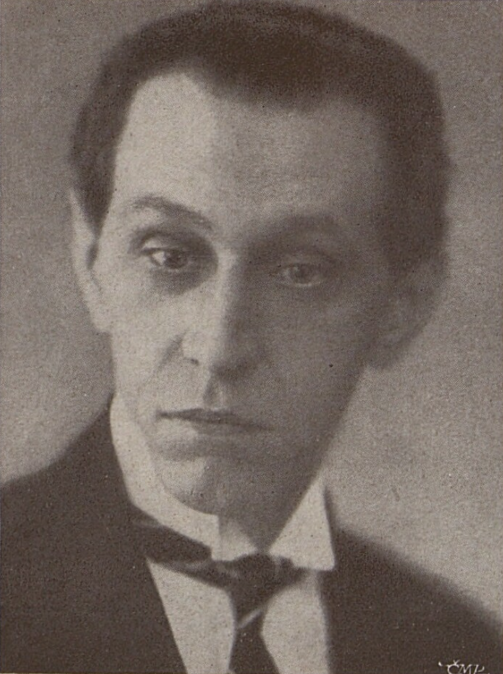
Osvald Chlubna (22 July 1893 – 30 October 1971) was a Czech composer.
0 comentarii0 vizualizări0 reacții
 🔍 Mărește
In memoriam
Osvald Chlubna (22 July 1893 – 30 October 1971) was a Czech composer.
Osvald Chlubna a adăugat o fotografie
ieri
Osvald Chlubna (22 July 1893 – 30 October 1971) was a Czech composer.
Osvald Chlubna a adăugat o fotografie
ieri
Life and career Chlubna was born on 22 July 1893 in Brno. Intending originally to study engineering, Chlubna switched his major and from 1914 to 1924, he studied composition with Leoš Janáček. Until 1953, he worked as a clerk. Later, he taught at the Organ School in Brno for many years. He worked in many art organisations in Brno. Chlubna's works can be defined by three distinct periods: Romanticism, Impressionism, all the way to the Modern Constructivism. He delved into Symbolism as well. He used the texts of symbolic Czech poets, such as Otakar Březina, Jaroslav Vrchlický, Jaroslav Durych and others. He wrote several cycles of compositions for piano and organ, as well as instrumental concerts, symphonies, ouvertures and cantatas. He wrote many operas, often using his own librettos, such as The Revenge of Catullus based on the work of Vrchlický (1917), Alladina and Palomid (based on the work of Maeterlinck, 1925), Ňura (1932), How the Death came in the World (1936), Jiří from Kunštát and Poděbrady (based on the work of Alois Jirásek, 1941), Cradle (composed on the work of Jirásek, 1951), Eupyros (1960). He also wrote texts and articles primarily about Janáček. Chlubna died on 30 October 1971…
Osvald Chlubna a lăsat un gând
ieri
Opera Pomsta Catullova (The Revenge of Catullus), 1 Act (1917); libretto by the composer based on the work of Jaroslav Vrchlický Alladina a Palomid (Alladina and Palomid), 3 Acts (1922); libretto by the composer based on the work of Maurice Maeterlinck Ňura, 2 Acts (1930); libretto by O. Dymov Jak smrt přišla do světa (How Death Came into the World) (1936); libretto by the composer Freje pána z Heslova (The Friar of Heslov), 4 Acts (1939–1940); libretto by F. L. Stroupežnichký Jiří z Kunštátu a Poděbrad (Jiří from Kunštát and Poděbrady), 3 Acts (1941–1942); libretto by the composer based on the work of Alois Jirásek Kolébka (The Cradle), 3 Acts (1951–1952); libretto by the composer based on the work of Alois Jirásek Eupyros, 3 Acts (1960–1962); libretto by the composer
Osvald Chlubna a lăsat un gând
ieri
Ballet Hrátky na drátkách (1955); libretto by the composer
Osvald Chlubna a lăsat un gând
ieri
Symphony No.3 "Osudová" (1960) To je má zem (This is My Country), Cycle of Symphonic Poems for Orchestra
Osvald Chlubna a lăsat un gând
ieri
Andante for Violin and Small Orchestra Fantasie in C Minor for Viola and Orchestra, Op.44 (1936)
Osvald Chlubna a lăsat un gând
ieri
Chamber Elegie ztracených lidí (Elegy of Lost Peoples) for Cello and Piano (1924) Fantasie for violin and viola, Op.71 (1949)
Osvald Chlubna a lăsat un gând
ieri
Invence (Invention) for Viola Solo (1962) Sonata for Violin and Cello, Op.22 (1925) Sonata for Violin and Piano, Op.66 (1948)
Osvald Chlubna a lăsat un gând
ieri
String Quartet in C Major, Op.26 String Quartet No.3 in E♭, Op.35 (1933)
Osvald Chlubna a lăsat un gând
ieri
Piano Nokturna (Nocturnes), Cycle of Moods, Op.36 (1933)
Osvald Chlubna a lăsat un gând
ieri
Já, potulný šumař, Cantata Je krásná země má, Lyric Cantata for Chorus and Orchestra; text by F. Halas, A. Sova Ve jménu života, Cantata for Chorus and Orchestra, Op.94
Osvald Chlubna a lăsat un gând
ieri
Vocal Melancholické serenády o lásce (Melancholic Serenades of Love) for Voice and Piano, Op.62