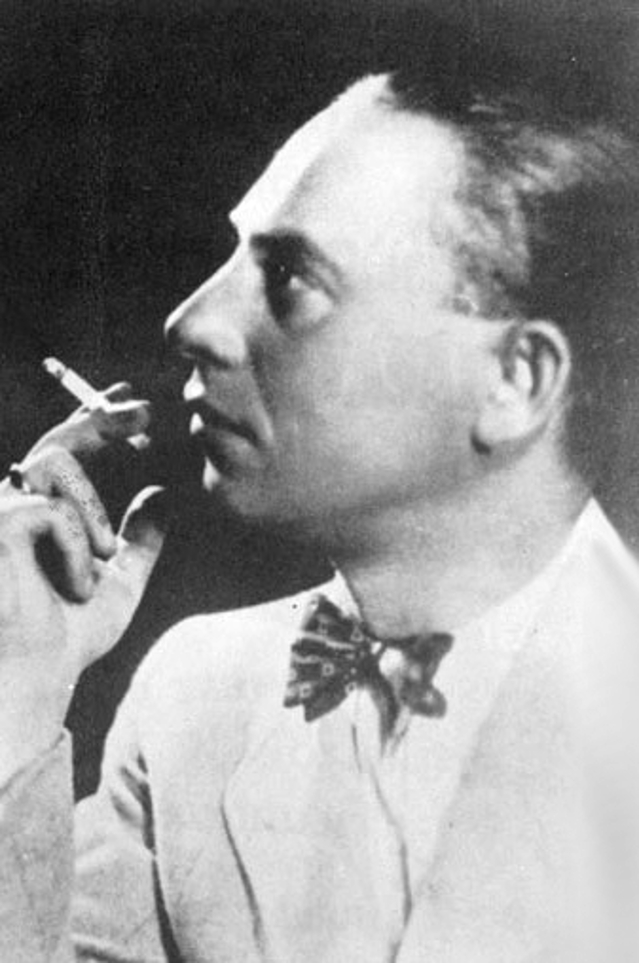
Rezső Seress (Hungarian: Seress Rezső, [ˈʃɛrɛʃː ˈrɛʒøː]; 3 November 1899 – 12 January 1968) was a Hungarian pianist and composer. Some sources give his birth name as Rudolf ("Rudi") Spitzer.
Rezső Seress (Hungarian: Seress Rezső, [ˈʃɛrɛʃː ˈrɛʒøː]; 3 November 1899 – 12 January 1968) was a Hungarian pianist and composer. Some sources give his birth name as Rudolf ("Rudi") Spitzer.
0 comentarii0 vizualizări0 reacții
Rezső Seressa adăugat o fotografie
acum 3 zile
R.I.P Rezső
Biography Rezső Seress lived most of his life in poverty in Budapest, from where, being Jewish, he was taken to a labor camp by the Nazis during the Second World War. He survived the camp and after employment in the theatre and the circus, where he was a trapeze artist, he concentrated on songwriting and singing after an injury. Seress taught himself to play the piano with only one hand. He composed many songs, including Fizetek főúr (Waiter, bring me the bill), Én úgy szeretek részeg lenni (I love being drunk), and a song for the Hungarian Communist Party to commemorate the chain bridge crossing the river in Budapest, Újra a Lánchídon (Again on the chain bridge). His most famous composition is Szomorú Vasárnap ("Gloomy Sunday"), written in 1933, which gained infamy as it became associated with a spate of suicides. Seress felt a strong loyalty to Hungary, and one reason for his poverty while having a world-famous song was that he never wished to go to the USA to collect his royalties, instead staying as pianist at the Kispipa restaurant in his home town. This restaurant had a pipe stove at the centre of its dining room and was…