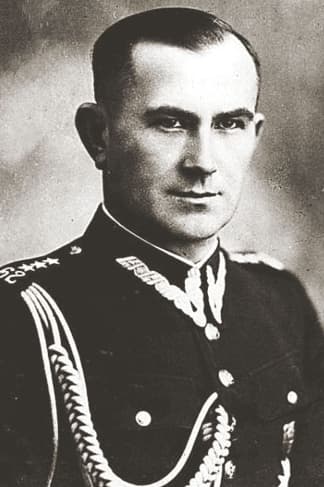
Władysław Liniarski, alias Mścisław, Wuj, Jan (born November 23, 1897 in Małachowice-Gustawów - April 12, 1984 in Warsaw) was a colonel of the Polish Armed Forces, commander of the Białystok District of the Union of Armed Struggle from February to September 1941, commander of the Białystok District of the Union of Armed Struggle-Home Army (continuously for 5 years), from January 1945 commander of the Białystok District of the Citizens' Home Army. Activist of the post-war anti-communist underground, victim of communist repressions. In 1979 he became a member of the Committee for the Agreement f
Władysław Liniarski, alias Mścisław, Wuj, Jan (born November 23, 1897 in Małachowice-Gustawów - April 12, 1984 in Warsaw) was a colonel of the Polish Armed Forces, commander of the Białystok District of the Union of Armed Struggle from February to September 1941, commander of the Białystok District of the Union of Armed Struggle-Home Army (continuously for 5 years), from January 1945 commander of the Białystok District of the Citizens' Home Army. Activist of the post-war anti-communist underground, victim of communist repressions. In 1979 he became a member of the Committee for the Agreement for the Self-Determination of the Nation. In 2017 posthumously promoted to the rank of brigadier general
0 comentarii0 reacții
Władysław Liniarskia adăugat o fotografie
acum 3 luni
R.I.P Władysław
Biography
Son of Jan and Józefa née Bielanowicz, owners of a two-morgen farm he was born in Małachowice-Gustawów in the Włoszczowa County of the Kielce Governorate. After graduating from primary school in 1913, he began studying at a teachers' seminary in Jędrzejów. He interrupted his studies at the outbreak of World War I. From 1917, he was active in the Polish Military Organization. During the Polish–Soviet War, he fought as a corporal in the 24th Infantry Regiment, then promoted to officer, and served for many years in chancelleries and commissariats.
In 1932, he served in the Command of the District Corps No. IX in Brześć, in the rank of lieutenant with seniority from 1 July 1925 and 1st place in the corps of administrative officers, group of chancellery officers. In March 1934, he was transferred to the corps of infantry officers, leaving his position at the Infantry Cadet School. On September 15 of that year, he was transferred to the 62nd Infantry Regiment in Bydgoszcz. In March 1939, he commanded the 6th company in that regiment.
0 comentarii0 reacții
Władysław Liniarskia adăugat o fotografie
acum 3 luni
R.I.P Władysław
World War II In the German Invasion and the Soviet Invasion of Poland, as commander of the 1st Battalion of the 62nd Infantry Regiment, he defended Pomerania and fought in the Battle of the Bzura. Wounded on September 20 in the Kampinos Forest, he was taken prisoner, from which he escaped. From 1940, he was the commander of the Białystok District of the Union of Armed Struggle and then Home Army in the Soviet occupation area. In 1943, he issued an order to liquidate "communist-Jewish gangs", which later became the cause of accusations of anti-Semitism. By Order No. 256 of April 20, 1944, Lieutenant Colonel "Mścisław", commander of the "Sarna" District (Białystok AK District), gave the partisan units and units of the Kedyw of the Białystok AK District the names of regiments of the Polish Army. For example, the Augustów District No. 7 "Olcha" of the Suwałki Inspectorate was to recreate the 1st Krechowiecki Uhlan Regiment. Its temporary name for the time of formation was "Partisan Unit of the 1st Uhlan Regiment". Liniarski, who was against the planned "Burza" action, in orders addressed to the commanders of inspectorates and districts, emphasized the will to beat the Germans, prepare for self-defense,…
0 comentarii0 reacții
Władysław Liniarskia lăsat un gând
acum 3 luni
Post-war In May 1945, Liniarski subordinated himself to the Armed Forces Delegation for Poland, which forced him to limit his organizational work and military actions. Through the voivode of Białystok Voivodeship Stefan Dybowski, he attempted to reveal the District's structures. He was arrested on July 31, 1945 in Brwinów near Warsaw. On May 20, 1946, he was sentenced by the District Military Court in Warsaw to death, which was later commuted to 10 years in prison. The structures of the Białystok District of the AKO became part of the Freedom and Independence Association. Many of its soldiers continued their activities, taking part in propaganda campaigns and distributing leaflets. In March 1951, during the trial against General August Emil Fieldorf, exhausted by illness and interrogations, he was carried into the courtroom on a stretcher and gave testimony incriminating his former superior from Kedyw. In 1953, he was released from prison in a serious health condition. On August 16 and August 20, 1957, Władysław Liniarski withdrew his statements forced on him during the investigation against General August Emil Fieldorf before Stanisław Krygiel, deputy prosecutor of the General Prosecutor's Office of the Polish People's Republic. In 1957, he received an allowance and assistance…
0 comentarii0 reacții
Władysław Liniarskia lăsat un gând
acum 3 luni
Bibliography
Komorowski, Krzysztof, ed. (1999). Armia Krajowa – szkice z dziejów Sił Zbrojnych Polskiego Państwa Podziemnego (in Polish). Warszawa: Rytm. ISBN 8388794116.
Rybka, Ryszard; Stepan, Kamil (2006). Rocznik oficerski 1939. Stan na dzień 23 marca 1939. Kraków: Fundacja CDCN. ISBN 978-83-7188-899-1..
Dobroński, Adam (2014-04-28). "Komendant Władysław Liniarski" (in Polish). Kurier Poranny. Archived from the original on 2025-07-08. Retrieved 2025-07-01.