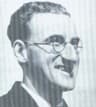
Boris Papandopulo (February 25, 1906 – October 16, 1991) was a Croatian composer and conductor of Greek and Russian Jewish descent. He was the son of Greek nobleman Konstantin Papandopulo and Croatian opera singer Maja Strozzi-Pečić and one of the most distinctive Croatian musicians of the 20th century. Papandopulo also worked as music writer, journalist, reviewer, pianist and piano accompanist; however, he achieved the peaks of his career in music as a composer. His composing oeuvre is imposing (counting cca 460 works): with great success he created instrumental (orchestral, concertante, cham
Boris Papandopulo (February 25, 1906 – October 16, 1991) was a Croatian composer and conductor of Greek and Russian Jewish descent. He was the son of Greek nobleman Konstantin Papandopulo and Croatian opera singer Maja Strozzi-Pečić and one of the most distinctive Croatian musicians of the 20th century. Papandopulo also worked as music writer, journalist, reviewer, pianist and piano accompanist; however, he achieved the peaks of his career in music as a composer. His composing oeuvre is imposing (counting cca 460 works): with great success he created instrumental (orchestral, concertante, chamber and solo), vocal and instrumental (for solo voice and choir), stage music and film music. In all these kinds and genres he left a string of anthology-piece compositions of great artistic value.
0 comentarii0 reacții
Boris Papandopuloa adăugat o fotografie
acum 3 luni
R.I.P Boris
Biography “Born, growing up and being brought up in a family that had always been tightly connected with music and the theatre”, he devoted himself to music very early on. He first of all took private lessons in piano, and then studied composition at the Music Academy in Zagreb (where he attended the lectures of Dugan, Lhotka and Dobronić, and studied composition in and graduated from the class of Blagoje Bersa in 1929). In Vienna, at the New Vienna Conservatory, he studied conducting under Dirk Fock (1928–1930). During two periods (1928–1934 and 1938–1946) he was a conductor of the Croatian Singing Association called Kolo, Zagreb, and from 1931 to 1934 had posts of conductor of the Society Orchestra of the Croatian Music Institute and choirmaster of the "Ivan Filipović" Teachers’ Singing Association (which he himself founded in 1933). From 1935 to 1938, he worked as a teacher at the State Music School in Split, and was conductor of the Zvonimir Music Association, as well as, from 1940 to 1945, of the Zagreb Opera (from 1943 to 1945 he was its director). At the same time he was a conductor of the orchestra of Radio Zagreb (1942–1945). After World War II…
0 comentarii0 reacții
Boris Papandopuloa lăsat un gând
acum 3 luni
Oeuvre Papandopulo's opuses were marked by features of the “national music style”, as it was called, that is, of patterns from folk music (either direct quotations or in the sense of the raw material and modal scale structures), while cosmopolitan influences are also appreciable: the application of composition technique elements of the neo-Classical style: polyphonic in structure, with Baroque energy and vital rhythmic movement, elementary touches of Impressionist and Expressionist musical idioms. Along with a treatment of the instruments that makes great demands on skill, technique and virtuosity, very visible are the optimism and serenity that permeate the music to the full. Connoisseurs of the composer's oeuvre of the earlier creative period pick out as the most successful works his Laudamus (Slavoslovije), cantata for solo voices, mixed voice choir and orchestra; Sinfonietta for String Orchestra (published by Breitkopf und Härtel), Zlato / Gold, a mime ballet with singing and orchestra; the brilliant, bravura Concerto da camera for Solo Soprano, Violin and Seven Wind Instruments (published by Vienna's Universal Edition) and the most important Croatian religious works from the end of that period of Papandopulo's creativity – the oratorio for solo voices and a male a cappella choir Muka Gospodina našega…
0 comentarii0 reacții
Boris Papandopuloa lăsat un gând
acum 3 luni
Concertante
Concerto da Camera for Soprano (Vocalise) and Chamber Ensemble, Op.11 (published 1941)
0 comentarii0 reacții
Boris Papandopuloa lăsat un gând
acum 3 luni
Concerto for Violin and Orchestra (1943)
Concerto for Double Bass and String Orchestra (1968)
Concerto for Harpsichord and String Orchestra (1962)
0 comentarii0 reacții
Boris Papandopuloa lăsat un gând
acum 3 luni
Concerto for Piano and String Orchestra
Concerto for Piano and Orchestra No. 3 (1959)
0 comentarii0 reacții
Boris Papandopuloa lăsat un gând
acum 3 luni
Concerto for Alto Saxophone and Orchestra
Little Concerto for Piccolo and String Orchestra (1977)
0 comentarii0 reacții
Boris Papandopuloa lăsat un gând
acum 3 luni
Elegie for Bassoon and Piano
Introduzione, Ariosa, Danza for Cello and Piano
0 comentarii0 reacții
Boris Papandopuloa lăsat un gând
acum 3 luni
Contradanza for Piano
Hrvatski tanac (Croatian Dance) for Piano, Op.48
0 comentarii0 reacții
Boris Papandopuloa lăsat un gând
acum 3 luni
Vocal
Čakavska Suita for (High) Voice and Orchestra
Hrvatska Misa (Croatian Mass) in D Minor for Soprano, Alto, Tenor and Baritone Soloists and Mixed Chorus, Op.86 (1939)
Muka gospodina našega isukrsta , Oratorio for Soloists and Male Chorus a Cappella, Op.61
0 comentarii0 reacții
Boris Papandopuloa lăsat un gând
acum 3 luni
Osorski Requiem
Five Orchestral Songs for Baritone, String Orchestra, and Harp (1961)
Stojanka majka Knežopoljka for Soprano, Chorus and Orchestra
0 comentarii0 reacții
Boris Papandopuloa lăsat un gând
acum 3 luni
Legacy
Boris Papandopulo is held in high esteem in his native country.
The "Papandopulo" Croatian Competition of young musicians is named for Boris Papandopulo. It is hosted in the small hall of the Vatroslav Lisinski Concert Hall annually in January. The competition was founded in 2012 and 2026 saw the 14th edition of the competition.