Cemeteries
509.146 cemeteries worldwide. Search the map, filter by country or browse the list.
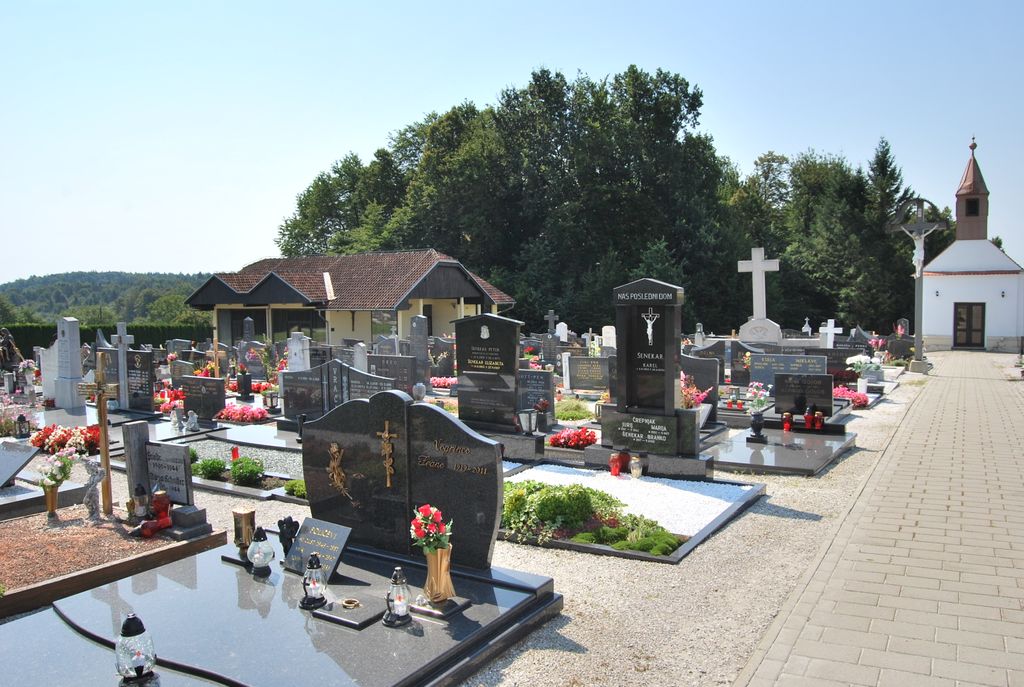
Sv. Trojica v Slovenskih goricah
📍 Sveta Trojica, Slovenia
Sv. Trojica v Slovenskih goricah
2 defuncți →

Szatmárhegy Reformed Cemetery
📍 Viile Satu Mare, Comuna Viile Satu Mare, Romania
This cemetery is in the village of Viile Satu Mare (Romanian) Szatmárhegy (Hungarian). It is the town cemetery for the Hungarian Reformed Church.
2 defuncți →
Szilágynagyfalui Temető
📍 Nusfalau, România
Szilágynagyfalui Temető
2 defuncți →

Szovjet katonai parcella
📍 Vecsés, Ungaria
Pestszentlőrinc (literally Saint Lawrence of Pest) is a historic suburban area in southeastern Budapest, Hungary. Formerly an independent town, it has formed the northern part of the XVIII District of Budapest (Pestszentlőrinc–Pestszentimre) since 1950. The district developed in the late nineteenth and early twentieth centuries as one of Pest’s major suburban expansion areas. It is known for its historic villa districts, featuring tree-lined streets, large gardens, and early twentieth-century residential architecture. Among its notable landmarks is the Herrich–Kiss Villa, a nineteenth-century estate later expanded into a representative villa by architect István Kiss, now functioning as a museum. It is the birthplace of Béla Kondor, and is associated with several other cultural figures who lived in its villa neighborhoods. Today, it remains a predominantly residential district characteriz
2 defuncți →

Talmacel Cemetery
📍 Tălmăcel, România
Talmacel CemeteryStr. Bisericii 275Talmacel, Sibiu County, RomaniaCuvioasa Paraschiva BisericaRomanian Orthodox Church CemeteryLocated in the center of town; enclosed with a stone wall (fortress style) on the South side of the Romanian Orthodox Church. The Church was started in 1777, with construction completed in 1786.
2 defuncți →

Talmaciu Cemetery
📍 Talmaciu, România
The Cemetery (Cimitir) is located behind the St. Nicolas Romanian Orthodox Church (Biserica).
2 defuncți →

Temető
📍 Abda, Ungaria
Abda este un sat în districtul Győr, județul Győr-Moson-Sopron, Ungaria, având o populație de 3.077 de locuitori (2011).
2 defuncți →
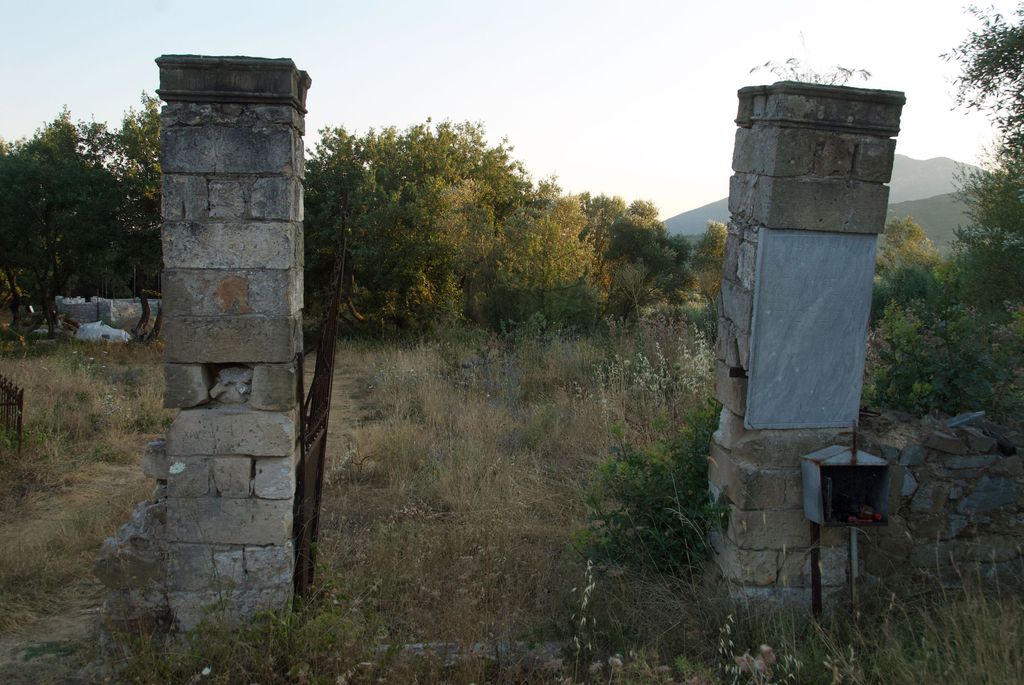
The Cemetery at Agios Georgios
📍 Skala, Regional unit of Messenia, Greece
A marble plaque on the entrance pillars reads: ΔΟΡΗΤΑΙ ΒΑΣΙΛΗΣ Κ. ΚΥΡΙΑΖΗΣ ΑΘΑΝΑΣΙΟΣ Δ. ΠΑΠΠΑΔΑΣΚΑΛΟΠΟΥΛΟΣ ΔΗΜΗΤΡΗΣ Κ. ΚΥΡΙΑΖΗΣ ΠΑΝΑΓΙΩΤΗΣ ΗΛΙΑΣ ΑΝΑΡΙΟΠΟΥΛΟΣ ΒΑΣΙΛΗΣ ΗΛΙΑΣ ΑΝΑΡΙΟΠΟΥΛΟΣ ΔΗΜΗΤΡΗΣ ΑΘΑΝΑΣΙΟΣ ΔΙΑΜΑΝΤΟΠΟΥΛΟΣ ΑΘΑΝΑΣΙΟΣ Κ. ΚΥΡΙΑΖΗΣ ΕΓΕΝΕΤΟ ΤΗ 15 ΜΑΙΟΥ 1911 GIFTED BY VASILIS K. KYRIAZIS ATHANASIOS D. PAPPADASKALOPOULOS DIMITRIS K. KYRIAZIS PANAGIOTIS ILIAS ANARIOPOULOS VASILIS ILIAS ANARIOPOULOS DIMITRIS ATHANASIOS DIAMANTOPOULOS ATHANASIOS K. KYRIAZIS DONE ON MAY 15, 1911 The Kyriazis family donated the land. The original church of St. George burned down, and a new church was built in 2006. As is tradition, many of the bodies were exhumed and the bones stored in boxes to make room for new burials. Unfortunately, many of these stored bones were lost in the church fire. Others were relocated to the community cemetery in Skala.
2 defuncți →
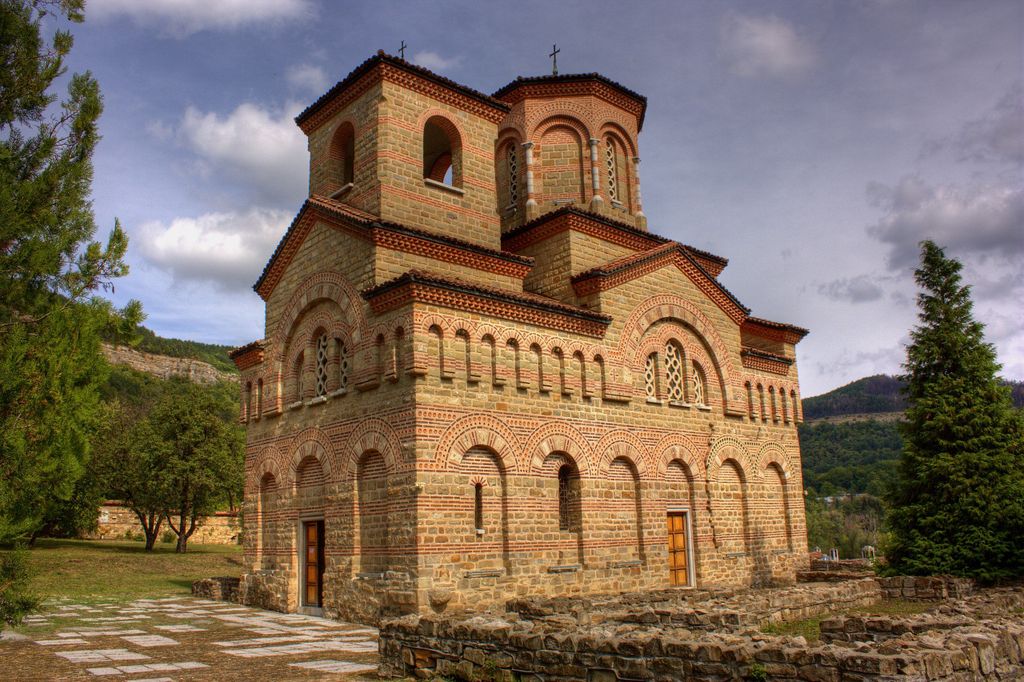
The Church of Saint Demetrius of Thessaloniki
📍 Tsarevets, Obshtina Svishtov, Bulgaria
The Church of Saint Demetrius of Thessaloniki (Bulgarian: църква "Св. Димитър Солунски", tsarkva "Sv. Dimitar Solunski") is a medieval Bulgarian Orthodox church in the city of Veliko Tarnovo in central northern Bulgaria, the former capital of the Second Bulgarian Empire. The church lies at the northeastern foot of the Trapezitsa and Tsarevets hills, on the right bank of the Yantra River, outside the city's medieval fortifications. Architecturally, it has a pentahedral apse and a cross-domed design with a narthex and a fore-apse space. It was once part of a large monastery and belonged in its southeastern part. The church's exterior is decorated with blind arches and colourful ornaments: glazed rosettes, suns, rhombs and other painted figures. The church was built of stone alternated with three rows of bricks. Source : Wikipedia
2 defuncți →

The Jewish Cemetery of Otaci
📍 Vălcineț, Republica Moldova
The Jewish Cemetery of Otaci (Ataki, Otachi) Before 1917 Ataki was part of the Soroki district of Bessarabia gubernia of Russian Empire. Now it is part of the Republic of Moldova Introduction This project is a result of a large effort of Bessarabia SIG to preserve the memory of Jews once living in Ataki, Bessarabia. The main part of the project was to Photograph and Index all remaining tombstones at the cemetery. It also incorporated the Burial Written Registry of Ataki cemetery donated to Bessarabia SIG by Miriam Weiner and Routes to Roots Foundation as part of our agreement, see https://www.jewishgen.org/Bessarabia/MiriamW.html The tombstones were photographed by Serghey Daniliuk, a resident of Kaushany, Moldova who photographed many Jewish cemeteries in Bessarabia and Moldova for Bessarabia SIG. The project started in 2015. There are several large sections of the cemetery not yet photographed, because of no access to the graves. To complete this work, the paths will have to be cleared in these sections, and some tombstones cleaned. According to our photographer there are almost another 1000-1200! graves not photographed yet. 4,690 Jews lived in Otaci in 1897 from a total of 6,976 residents, 65 Jewish businesses were in town in 1924 with total residents of 5,017, and 2,781 Jews lived in Otaci in 1930 from a total of 3,503 residents. There are six quarters which have been photographed and two large quarters not photographed yet. Every record and image name has 5-digit Plot Number. The first digit is the quarter, the two next digits are the row number and last 2 digits are the plot number in the row. There are also a number of burial records with plot number starting with 9. These are from the burial written registry, and they had their own numbering as in the written registry. The project of photographing, indexing The first part of the project was to translate the Burial Written Registry of Otaki cemetery, received from Miriam Weiner and Routes to Roots Foundation as part of our agreement. There were 773 records in the Registry, and 40 of them did not have any names. The Written Registry is compiled by local people hand written in Russian and typed in Hebrew. The second part of the project was to Photograph tombstones, and index them. After indexing the photos, we got 1745 records with names, dates. Also 258 images are of Unknown tombstones. The third part of the project was to reconcile the Burial Registry with Index from the photos. 269 records from the written burial registry were found among the photo/index. The duplicates were removed from the final registry, the other about 500 records from the Written Registry were added to the index without photos. Total number of burial records submitted to JOWBR is 2203 with 1733 photos. Also there are 258 images of Unknown graves, which can be accessed at the Bessarabia SIG / Cemetery section or directly at Unknown Otaci Cemetery graves. Language of the inscriptions: the written registry is done in handwritten Russian and typed Hebrew. The inscriptions on about half of tombstones are written in only Hebrew. One third is written in Russian only, and a small number in both languages. Dates: The Burial Written Registry has records from 1767, total of 14 records from 18 century. The last record from the Written Registry is from 1997. The records with photos are from the beginning of 19 century and up to 2002. From the report "Jewish Heritage Sites and Monuments in Moldova" According to the report "Jewish Heritage Sites and Monuments in Moldova", created by United States Commission for the Preservation of America's Heritage Abroad, 2010, The Jewish cemetery in Otachi is 160,000 square meters and contains more than 500 gravestones, as well as a monument dedicated to the victims of the Holocaust. The oldest gravestones are from the nineteenth century. The cemetery is surrounded by a broken masonry wall; fewer than 25% of the stones are toppled and broken. The site has a regular caretaker, but the vegetation overgrowth is a constant problem. Restoration work to patch the broken stones and clear the vegetation was carried out between the years 2000 and 2004. Volunteers Terry Lasky translated all records from the Burial Written Registry. The photo images translation was done by Robin Meltzer, and mostly by a person who prefers to stay anonymous. That person did a terrific job of deciphering numerous almost unreadable inscriptions. The third person who did a great job to translate the most unreadable writings was Nathen Gabriel. Thanks to all for the incredible hard job you performed.
2 defuncți →
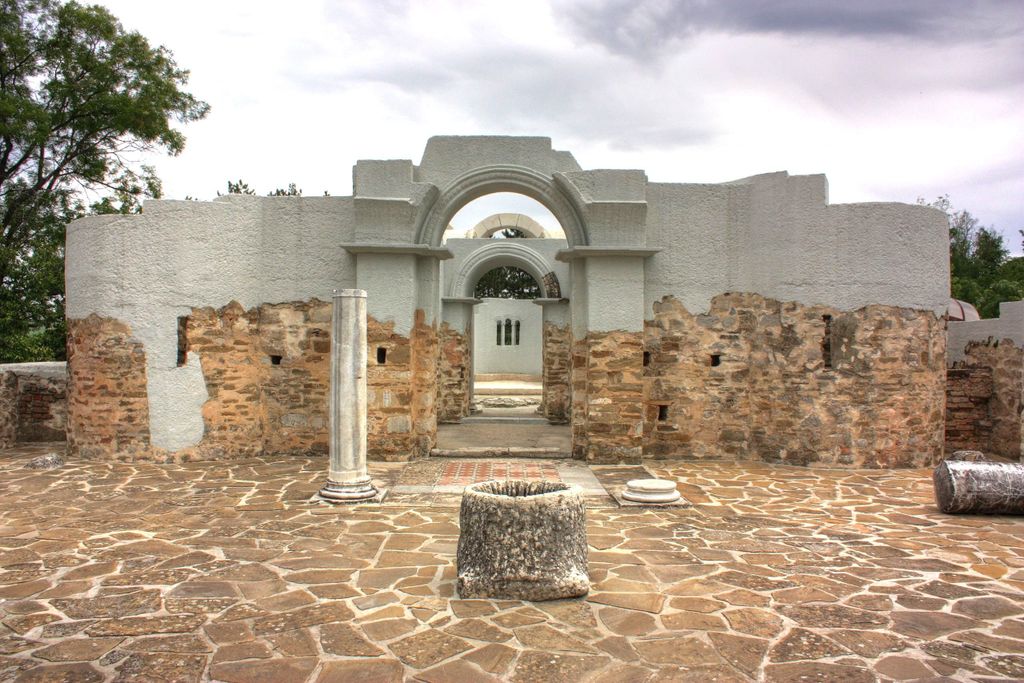
The Round Church (Golden Church)
📍 Veliki Preslav, Obshtina Veliki Preslav, Bulgaria
Defunct. The Round Church (Bulgarian: Кръгла църква, Kragla tsarkva), also known as the Golden Church (Златна църква, Zlatna tsarkva) or the Church of St John (църква "Свети Йоан", tsarkva "Sveti Yoan"), is a large partially preserved early medieval Eastern Orthodox church. It lies in Preslav, the former capital of the First Bulgarian Empire, today a town in north-eastern Bulgaria. The Church dates to the early 10th century, the time of Tsar Simeon I's rule, and was unearthed and first archaeologically examined in 1927–1928. Considered to be one of the most impressive examples of medieval Bulgarian architecture, the Round Church takes its name from the distinctive shape of one of its three sections, the cella (naos), which is a rotunda that serves as a place of liturgy. The Church's design also includes a wide atrium and a rectangular entrance area, or narthex, marked by two circular turrets. The Church has been likened to examples of religious architecture from the late Roman (Early Christian) period, the Caucasus, and the Carolingian Pre-Romanesque of Charlemagne because of its characteristic plan, which is significantly different from contemporaneous Bulgarian or Byzantine buildings. The Church's alternative name, the Golden Church, stems from its possible and popular identification with a "new golden church" in Preslav referenced in a medieval literary source. Source : Wikipedia
2 defuncți →
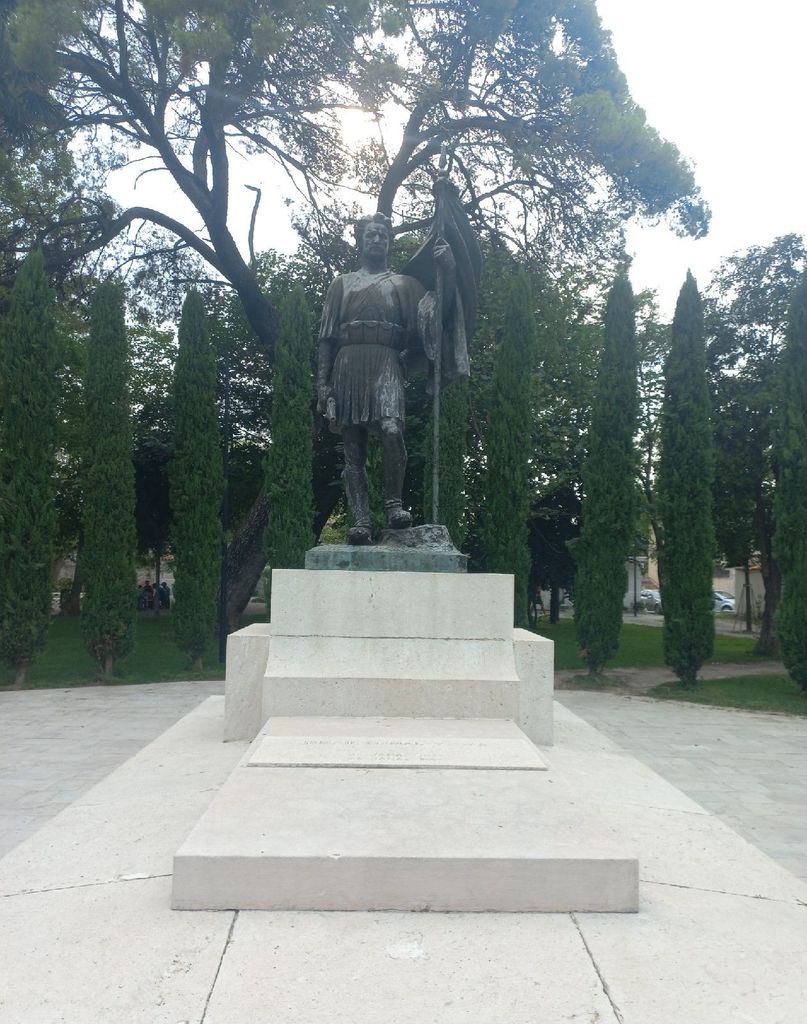
Tomb of Ismail Qemali
📍 Vorë, Vlorë Municipality, Albania
Tomb of Ismail Qemali
2 defuncți →
Tomb of Lyson and Kallikles
📍 Lefkadia, Regional unit of Imathia, Greece
Tomb of Lyson and Kallikles
2 defuncți →
Tomb of People's Heroes
📍 Belgrade, Belgrade, Serbia
Tomb of People's Heroes
2 defuncți →
Trandzamentsko Cemetery
📍 Novi Sad, Južnobački okrug, Serbia
Cemetery is in Petrovaradin, part of Novi Sad.
2 defuncți →
Transfiguration of the Saviour Cemetery
📍 Elatou, Regional unit of Aetolia-Acarnania, Greece
Transfiguration of the Saviour Cemetery
2 defuncți →
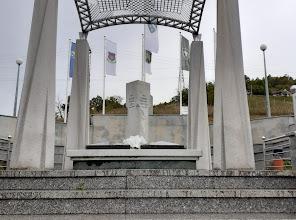
Turbe generala Izeta Nanića i šehida 505. Viteške brigade
📍 Gornji Žirovac, Croația
Turbe generala Izeta Nanića i šehida 505. Viteške brigade
2 defuncți →

Uhříněveský hřbitov sv.Václava
📍 Stupice, Cehia
2 defuncți →

Újbánhidai temető
📍 Tatabánya, Ungaria
Tatabánya ( în germană Totiserkolonie) este un oraș în Ungaria. Este reședința județului Komárom-Esztergom și unul dintre cele 23 orașe cu statut de comitat ale țării.
2 defuncți →

Újhatvani temető
📍 Hatvan, Ungaria
Hatvan este un oraș în districtul Hatvan, județul Heves, Ungaria, având o populație de 20.720 de locuitori (2011).
2 defuncți →

Újtemető
📍 Szarvas, Ungaria
Szarvas (în slovacă Sarvaš) este un oraș în districtul Szarvas, județul Békés, Ungaria, având o populație de 17.230 de locuitori (2011).
2 defuncți →

Újvárosi temető
📍 Szekszárd, Ungaria
Szekszárd este un oraș în Ungaria. Este reședința județului Tolna și unul dintre cele 23 orașe cu statut de comitat ale țării. Aici s-a născut scriitorul Mihály Babits.
2 defuncți →

Urnenhain Urfahr
📍 Linz, Austria
2 defuncți →

urnový háj
📍 Lhota, Cehia
2 defuncți →