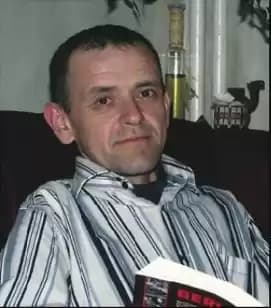
Dariusz Ratajczak (28 November 1962 – 2010) was a Polish historian (formerly of the University of Opole), publicist and right-wing activist. In 1999, he was convicted of Holocaust denial in Poland (the case was upheld on appeal in 2001).
Dariusz Ratajczak (28 November 1962 – 2010) was a Polish historian (formerly of the University of Opole), publicist and right-wing activist. In 1999, he was convicted of Holocaust denial in Poland (the case was upheld on appeal in 2001).
0 comentarii0 reacții
Dariusz Ratajczaka lăsat un gând
acum 3 luni
Biography
Ratajczak was born in Opole, Upper Silesia, Poland. His father, Cyryl, moved from Greater Poland to Opole after finishing Law studies. His mother, Alina Czuchryj, was born in Chodorów (then in Poland). Dariusz Ratajczak finished Opole high school and enrolled to Adam Mickiewicz University in Poznań. From 1988 Ratajczak was working in a higher education institution in Opole, later changed to University of Opole, as a history lecturer until 1999. In that year he was dismissed following the controversy about his book Dangerous Topics, in which he asserted that the gas chambers at Auschwitz were used only to delouse the prisoners. He had also published articles in right-wing magazines Myśl Polska and Najwyższy Czas!.
0 comentarii0 reacții
Dariusz Ratajczaka lăsat un gând
acum 3 luni
Holocaust denial According to Ruth E. Gruber report, Dariusz Ratajczak, in his book Tematy Niebezpieczne ("Dangerous Topics"), appeared to agree with Holocaust deniers, who claimed that for technical reasons it was not possible to kill millions of people in the Nazi gas chambers, that Zyklon B gas was used only for disinfecting, that there was no Nazi plan for the systematic murder of Jews and that a majority of Holocaust scholars "are adherents of a religion of the Holocaust". Rajtaczak would defend himself claiming that he only quoted the Holocaust deniers' claims to illustrate their point of view, but did not endorse them. Ratajczak's book triggered widespread public criticism and drew protests from numerous sources, including the director of the museum at the former Auschwitz death camp, senator Władysław Bartoszewski, the mainstream Polish academic community and the bishop of Lublin. The University of Opole suspended Dariusz Ratajczak from teaching in 1999. In the same year he was taken to court, as denying the existence of the Holocaust was a criminal offence in Poland. In December 1999 the local court in Opole found Ratajczak guilty of breaching the Institute of National Remembrance law that outlawed the denial of crimes against humanity…
0 comentarii0 reacții
Dariusz Ratajczaka lăsat un gând
acum 3 luni
Death
Dariusz Ratajczak was found dead in a car parked near the shopping centre in Opole on 11 June 2010. The body was lying in the car for nearly two weeks and was in an advanced state of decay. The autopsy discovered that fatal alcohol poisoning was the cause of Ratajczak's death. He was buried at the municipal cemetery in Półwieś, Opole.
0 comentarii0 reacții
Dariusz Ratajczaka lăsat un gând
acum 3 luni
Political activity
In 2002 Ratajczak was considered as a candidate of the League of Polish Families for the Opole's voivodeship sejmik, but after his candidature caused controversy he resigned from running for the office.
0 comentarii0 reacții
Dariusz Ratajczaka lăsat un gând
acum 3 luni
Świadectwo księdza Wojaczka (Opole 1994)
Krajowa Armia Podziemna w powiecie prudnickim 1949-1952 (co-author, Opole-Gliwice 1996)
0 comentarii0 reacții
Dariusz Ratajczaka lăsat un gând
acum 3 luni
Tematy niebezpieczne (Opole 1999)
Tematy jeszcze bardziej niebezpieczne (Kociaty, New York, 2001)
Inkwizycja po polsku, czyli sprawa dr Dariusza Ratajczaka (Poznań 2003)