

Janina Turek a adăugat o fotografie
acum 3 luni
R.I.P
Janina
Janina
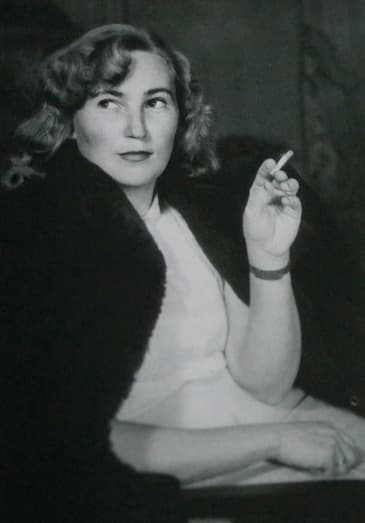
Janina Turek (21 November 1921 - 12 November 2000) was the author of one of the longest life accounts, also known as factologies.
0 comentarii0 reacții
 🔍 Mărește
In memoriam
Janina Turek (21 November 1921 - 12 November 2000) was the author of one of the longest life accounts, also known as factologies.
Janina Turek a adăugat o fotografie
acum 3 luni
Janina Turek (21 November 1921 - 12 November 2000) was the author of one of the longest life accounts, also known as factologies.
Janina Turek a adăugat o fotografie
acum 3 luni
Biography Her mother, Marianna Gąsiorska, was 42 when Janina was born in Krakow, Poland. Janina's father, Teofil Gurtler, was a city office worker. He made additional income by giving drawing classes. He created copies of many established and popular Polish oil painters, such as Jacek Malczewski, Józef Chełmoński, Bronisława Rychter Janowska. Janina attended public boarding schools for girls in Kraków. At that time, Poland had a single-sex public education system. Her good grades were often rewarded with books. Reading and literary analysis became Janina's greatest passion. During the Second World War and the German occupation, she was greatly disappointed that the Kraków Public Library was closed by the occupying forces. Due to the war, she could not take high school graduation exams and her dream of studying pharmacology was disrupted. Janina Turek lived with her family on Słoneczna Street (today's Bolesław Prus Street). She married Czesław Turek in November 1941 in Norbertanek's Monastery, Salwator, and they moved to an apartment on Moniuszki street. In February 1943, the Gestapo arrested Janina's husband. At the time, she was in her 5th month of pregnancy. After being taken to the local jail on Montelupich Street, Janina's husband was deported to the concentration camp…
Janina Turek a adăugat o fotografie
acum 3 luni
Work and legacy Janina Turek was not associated with any literary organization or political movement. Thus, her work can be regarded as related to outsider art. During her lifetime, Turek kept her work secret. The extensive legacy she left behind was posthumously discovered by her family. This legacy comprises 745 notebooks, with 410,000 consistently annotated and categorized facts from the author's everyday life. Turek divided her life into 33 categories. Each entry was accompanied by a date, name of the day, number, and color signifying the category to which the entry belonged. All of the entries were summarized monthly and yearly. Each year has a specific color that is repeated after a 10-year cycle. Each notebook had a signature, number, and subnumber. The idea for keeping such a detailed account of everyday life developed gradually. Beginning in 1939, Janina Turek wrote an account of her life entitled "Notebook, rather Diary" (in Polish it is "pamiętnik, raczej dziennik". 'pamiętnik' means a notebook for one's memories whereas 'dziennik' refers to a daily log of events.). In 1939, Turek wrote about her concerns regarding an inability to register on paper all she wanted to memorize and preserve. Four years later she began working…
Janina Turek a lăsat un gând
acum 3 luni
Bibliography Most of the following bibliography is in Polish. 1. Mariusz Szczygieł, a report "Reality" Gazeta Wyborcza, July 2001 2. TV Talk-Show, Mariusz Szczygieł. A conversation with Janina Turek 3. Joanna Zięba, Master's degree supervised by Prof. Andrzej Mancwel "Z archiwum życia Janiny Turek" ("From Janina Turek's Archive) Warsaw University, Polish Philology Department. In 2002 the work was featured in the magazine La Faute a Rousseau 4. Mariusz Szczygieł, a report "Reality" in a book "Cała Polska Trzaska" with French and German translation. 5. Paweł Rodak, an article "Dziennik pisarza: między codzienną praktyką piśmienną a literaturą", Pamiętnik Literacki : czasopismo kwartalne poświęcone historii i krytyce literatury polskiej 97/4, str. 38 ( Literacki's novelist: quarterly journal devoted to the history and criticism of Polish literature 97/4, p. 38) 6. Paweł Rodak, "Dni Dzienników" ("The days of diaries") presented during a Word Festival supported by Leonardo da Vinci Programme funded by European Commission, Warsaw University. 7. oryginal notebooks displayed for the first time on the show curated by Dominik Kuryłek, Roman Dziadkiewicz, Ewa Tatar an exhibition "Imhibition" at National Museum in Kraków, December - January, 2006–7. 8. Imhibition, ed. Roman Dziadkiewicz and Ewa Tatar, National Museum in Kraków, Korporacja Ha!art, Kraków 2006.…