

Józef Makowski a adăugat o fotografie
acum 3 luni
R.I.P
Józef
Józef
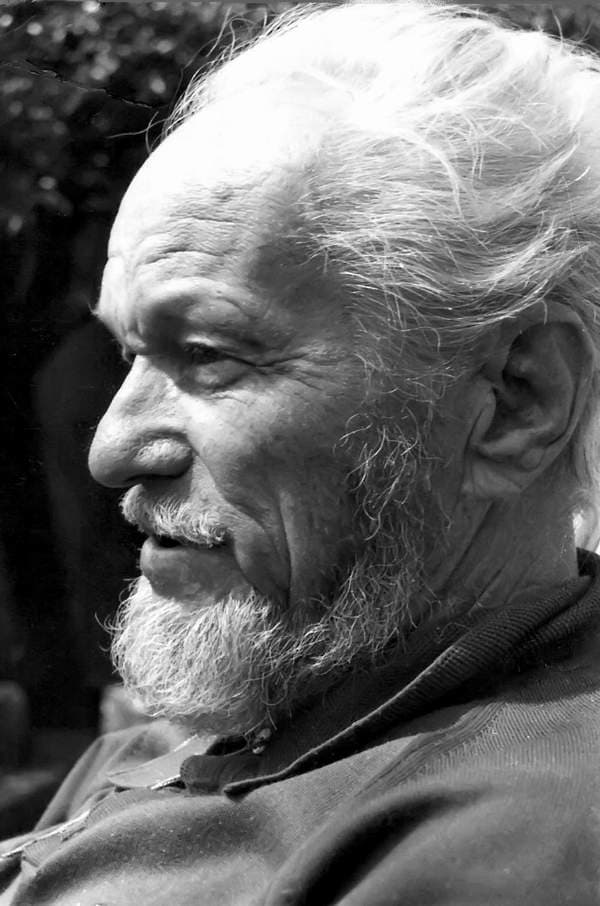
Józef Makowski (1914–1997), was a Polish sculptor and painter whose works are associated with Bydgoszcz.
0 comentarii0 reacții
 🔍 Mărește
In memoriam
Józef Makowski (1914–1997), was a Polish sculptor and painter whose works are associated with Bydgoszcz.
Józef Makowski a adăugat o fotografie
acum 3 luni
Józef Makowski (1914–1997), was a Polish sculptor and painter whose works are associated with Bydgoszcz.
Józef Makowski a adăugat o fotografie
acum 3 luni
Youth Józef Makowski was born in Toruń, then part of the German Empire, on 19 August 1914. He was the son of Józef and Anna née Besdun. In Toruń, he attended the gimnasium "Nicolaus Copernicus". In 1935, he underwent training at the Reserve Cadet School in Brodnica, then Strasburg in Westpreußen. From that period dates one of his first works, a bust of Marshal Piłsudski. After getting his matura, Józef studied from 1936 to 1939 at the Academy of Fine Arts in Warsaw, in the studio of prof. Tadeusz Breyer, working on sculpture and painting (portraits). He also started to appear in regional exhibitions.
Józef Makowski a adăugat o fotografie
acum 3 luni
Second World War During World War II, Makowski was a Home Army (Polish: Armia Krajowa) second lieutenant of the 4th Infantry Division. Under the nom de guerre of "Ziuk", he served in the 67th Infantry Regiment. Captured and wounded after the defeat, he was moved to the hospital of the Altergrabow camp. After recovery, he was placed in Sandbostel Stalag X-B, where he met Konstanty Ildefons Gałczyński, Roman Bratny and Jan Dobraczyński. From his friendship with Gałczyński, Józef Makowski made several portraits for the Polish poet.
Józef Makowski a adăugat o fotografie
acum 3 luni
Post War activity Back to civilian life, Józef Makowski had various jobs: he participated in the decoration of the "industrial exhibition" that took place for the 600th anniversary of Bydgoszcz. Then he was the artistic director of a stone workshop, before working at the "Building ceramics factory" (Polish: Fordońskie zakłady ceramiki budowlanej) in Fordon. In 1947 he was employed as an announcer at the Polish Radio. Makowski associated mainly his artistic activity with the city of Bydgoszcz. His most remarkable works include the following elements: In the 1950s, Makowski realized 4 stone fishes gushing out water, placed in a pool to replace the monumental fountain "The Deluge" (Polish: Potop). Melted down by German forces in 1942, the monument was located in the heart of the city, on Plac Wolności. Makowski's fishes were removed in 2010, when the colossal fountain started to be rebuilt. Stored away for more than 40 years, they have been restored by the University of Science and Technology. The city of Bydgoszcz has been putting them back into display since 2 June 2022, on the northern waterfront of the Mill Island. In 1969, the sculptor designed a monument called "The broken rose" (Polish: Złamana róża), in memoriam…
Józef Makowski a adăugat o fotografie
acum 3 luni
Family Józef Makowski was the first husband of Polish actress Helena Makowska-Fijewska (18 May 1918 in Rybno – 1 October 1993 in Warsaw). She was a student of Polish singer Eugenia Hoffman-Weikertowa. She made her debut in 1946 in Łódź. She played afterwards at the "Nowy Theater" in Warsaw and at the Polish Theater (1968–1974). Her repertoire included also TV, radio and movie roles. Helena's second husband was Polish actor Tadeusz Fijewski (1911–1978). Józef and Helena had a daughter, Ilona. Helena's older sister was the actress Urszula Modrzyńska (1928–2010).
Józef Makowski a lăsat un gând
acum 3 luni
Main works in Bydgoszcz Two works from Makowski are no more existent: A street "Piggy bank" (1980s and 1990s), standing at the intersection of Mostowa street and Stary Rynek. It received inhabitants donations for the reconstruction of city monuments. A carved handle door for the August Mentzel Tenement.
Józef Makowski a lăsat un gând
acum 3 luni
Other works Józef Makowski created works in other cities, such as: the "Monument to the Greater Poland Insurgents" in Łabiszyn (Polish: Powstańcom Wielkopolskim – Łabiszyn), unveiled on 10 October 1981; the "Monument to the Heroes of the fight for Polishness and freedom of the Mogilno land" in Mogilno (Polish: Pomnik Bohaterom walk o polskość i wolność ziemi mogileńskiej), unveiled in 1964; the "Monument to Polish and Soviet soldiers" (Polish: Monument ku czci żołnierzy polskich i radzieckich) in Chełmża, now dismantled. Makowski designed also interiors for "Herbapol" company establishments throughout Poland. Furthermore, he realized graphics and paintings. Apart from Bydgoszcz institutions (e.g. City Hall, Provincial Office in Bydgoszcz, Leon Wyczółkowski's District Museum), his works are in the hand of private collectors, in Bydgoszcz, Poznań, Warsaw and abroad (Japan, Germany, Belgium).
Józef Makowski a lăsat un gând
acum 3 luni
Source: Recipient of the Golden Cross of Merit, 1976; Badge of the Meritorious Activist of Culture, 1967; Badge of the Millennium of the Polish State (Polish: Odznaka 1000-lecia Państwa Polskiego), 1970; "Medal of the President of Bydgoszcz" (Polish: Medal Prezydenta Bydgoszczy), 1994. On March 24, 2010, Bydgoszcz authorities named a street after Józef Makowski. It runs between Lisia street and the Bydgoszcz Canal in Prądy district.
Józef Makowski a lăsat un gând
acum 3 luni
Bibliography Archives and Pomeranian Museum of the Home Army and the Military Service in Toruń, Fundacja Generał Elżbiety Zawackiej w Toruniu (1991). Józef Makowski. Archiwum i Muzeum Pomorskie AK oraz Wojskowej Służby Polek w Toruniu [Józef Makowski.] (in Polish). Toruń: Fundacja Generał Elżbiety Zawackiej.