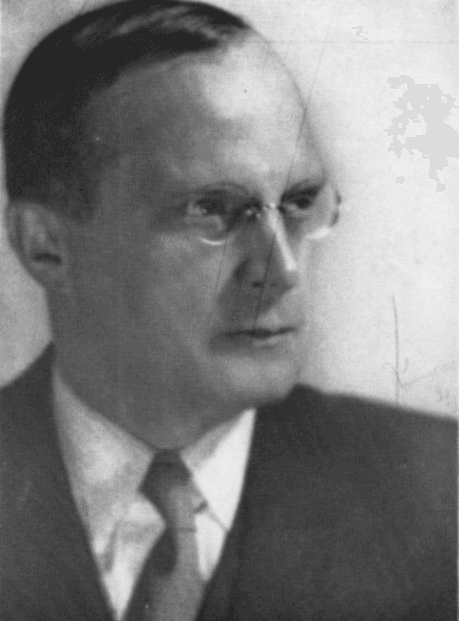
Juraj Krnjević (19 February 1895 – 9 January 1988) was a Croatian politician who was among the leaders of the Croatian Peasant Party (HSS). He was the party's General Secretary since 1928 and President since 1964. He also served as the First Deputy Prime Minister and Minister of Post, Telegraph and Telephone of Yugoslavia between 1942 and 1943.
Juraj Krnjević (19 February 1895 – 9 January 1988) was a Croatian politician who was among the leaders of the Croatian Peasant Party (HSS). He was the party's General Secretary since 1928 and President since 1964. He also served as the First Deputy Prime Minister and Minister of Post, Telegraph and Telephone of Yugoslavia between 1942 and 1943.
0 comentarii0 reacții
Juraj Krnjevića adăugat o fotografie
acum 3 luni
R.I.P Juraj
Early life Krnjević was born in Ivanić-Grad (Croatia, then part of Austro-Hungarian Empire). Mate Krnjević and Ana (née Marčinić) had two sons, Juraj and the five years younger Cvjetko. After primary schooling in Ivanić, both brothers went to the classical gymnasium in Zagreb. Juraj went on to study law, and Cvjetko, medicine. In a country with an overwhelmingly peasant population – freed from serfdom only after 1845 – only a tiny fraction, mainly of town-dwellers, had the right of vote. This was the context in which Stjepan Radić, towards the end of the century, created the agrarian movement for education and electoral emancipation of the peasants, as well as real autonomy for Croatia. The Croatian situation in the dual monarchy made Juraj especially interested in constitutional law. This took him to Vienna, where, to his amazement, he found that the professor of constitutional law, knowing no Hungarian, was quite ignorant of the Hungarian version of the 1867 Compromise. Juraj therefore spent some months in Budapest, long enough to learn the language and find that, indeed, the Hungarian texts differed significantly – and to the Hungarians’ advantage. By the end of the World War I, Croatia's situation changed radically. It was…
0 comentarii0 reacții
Juraj Krnjevića lăsat un gând
acum 3 luni
Political career in Yugoslavia Shortly after he became doctor in law (1919), Krnjević as head of a group of people interested in ongoing political events, invited Stjepan Radić to speak in Ivanić at the time of the agricultural fair – when Radić could be sure of a good audience. The speech went off so well that Krnjević, hugely impressed, immediately decided to accompany Radić on his further tour of Croatia. Thus began an intimate collaboration, formalized when Krnjević became secretary (1922), and then in 1928, general-secretary of the HSS. He was elected to parliament first in 1920 (its youngest member), and again in 1923, 1925 and 1927; but, as the new (1921) Constitution took no account of Croatian objections, Radić and his party refused to cooperate with successive governments. After much political turbulence, Radić and other HSS leaders (including Krnjević) were jailed in 1925. Seeing no alternative, in a more conciliatory spirit, Radić agreed to accept the status quo, dropped his republican stance, and joined the government. Krnjević now re-entered parliament, becoming minister of social affairs (1925–1927). According to Aleksa Đilas his anti-Serb sentiment and Croatian nationalism made his reputation. The strife between Croats and Serbs, however, soon resumed. It…
0 comentarii0 reacții
Juraj Krnjevića lăsat un gând
acum 3 luni
Exile In Geneva, Krnjević edited and printed ‘Croatia’, a multi-lingual newsletter reporting on Yugoslavia's brutal police regime. Both in Geneva and during several journeys to Paris and London, he tried to change the attitude of the Western powers, generally supportive of the centralist state, viewed as a bulwark against both German and Russian expansionism in the Balkans. Attempts to establish more direct contacts with governments were more successful at the Quai d'Orsay in Paris – especially when Léon Blum was in power - than at the Foreign Office in London, which had close ties with Belgrade: Winston Churchill was more receptive, but had little influence. In spite of their unwillingness to apply pressure on the Belgrade government, Krnjević strongly favoured the Western democracies, as opposed to the fascist regimes of Italy and Germany. He fought against the competing propaganda of ultranationalist Croats (later Ustashi), who had their principal base in Italy. Their leader, Ante Pavelić, tried to convince Benito Mussolini that he could establish Italian hegemony in the Balkans by sending troops to ‘liberate’ Croatia, ahead of any German moves in that direction. Throughout his exile, Krnjević kept in touch with Maček (in Zagreb), regularly sending him reports on the…
0 comentarii0 reacții
Juraj Krnjevića lăsat un gând
acum 3 luni
Return to Yugoslavia Having been nominated to the Senate, Krnjević was now able to return from Geneva, just as war broke out in Poland at the beginning of September 1939. As secretary-general of the HSS – now in control of the Croatian Banovina – Krnjević was much involved in both party and public affairs. Like the party president, Maček, he believed that the new Banovina provided a reasonable framework for Croatian aspirations to greater autonomy. They hoped that Yugoslavia would escape the horrors of war, but were both convinced that, in the long run, Britain would win. Albeit still generally popular, HSS was under increasing attack – from both right- and let-wing extremists – because of its commitment to a federalist solution for Yugoslavia (Bionich 2005). As things turned out, the Banovina lasted only 20 months, On March 27, an army – led coup in Belgrade drove out Cvetković and the Regent Prince Paul, installing General Dušan Simović as head of the government and Alexander's son, just short of the age of majority, as the new king, Peter II. Ostensibly against cooperation with Germany, the putsch was largely motivated by strong Serbian resentment against the Croatian Banovina, which was seen…
0 comentarii0 reacții
Juraj Krnjevića lăsat un gând
acum 3 luni
World War II Only ten days later on April 6, 1941, the German army invaded Yugoslavia and met little resistance. Vladko Maček, refusing to leave his people, asked Krnjević to replace him as vice-premier in the Yugoslav government - now about to flee the country. Together with some other Croat ministers and Ivan Šubašić (the Ban, or head of the new Banovina) Krnjević drove to Pale, near Sarajevo, where they joined the rest of the government. After a further drive to Nikšić (Montenegro), all flew out to Greece. After a few days in Athens, they traveled to Egypt and then to Jerusalem, where the government was reconvened on May 4 by King Peter II. To ensure the support of its Croatian members, one of the first acts of the government was to reaffirm its acceptance of the 1939 Sporazum and the Croatian Banovina. The Palestinian interlude lasted only three weeks. The senior members of government flew from Egypt to England, by a roundabout route via equatorial Africa, arriving in London at the end of June (1941). Though initially acclaimed in London as war heroes, the prestige of the Yugoslav government fell rapidly as increasingly serious dissensions came to the fore.…
0 comentarii0 reacții
Juraj Krnjevića lăsat un gând
acum 3 luni
Post-war exile When the war ended, knowing full well that he would be unable to function politically in the one-party state, Krnjević refused to return to Yugoslavia with Šubašić. As early as in 1943, he had strongly urged the HSS in Croatia to prepare for a takeover of power, as soon as permitted by the military situation – even sending detailed instructions how to proceed (Jelić-Butić, 1983). But in Croatia, the HSS was in great disarray: Maček was under house arrest; and many of its members had gone over to Tito or to Pavelić. Facing little organized resistance as the Germans retreated, the Partisans were soon in full control of the country. Krnjević's situation was not unlike that in prewar Geneva. There was little he could do directly in Yugoslavia. But there were many Croatian emigrants in North and South America, as well as some in Western Europe – including increasing numbers of Croats working in Germany (‘Gastarbeiter’) – who had been, or were, HSS supporters or potential recruits. He devoted the rest of his life to meeting and organizing émigré HSS groups, especially in Canada and the US, during regular travels to North America. He also wrote frequently for…