RIP.LIVE
Copertă🔍 Mărește

In memoriam

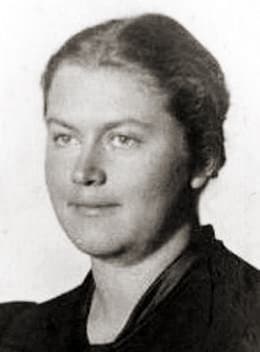
Krystyna Krahelska "Danuta" (24 March 1914 – 2 August 1944) was a Polish poet, ethnographer, member of the Home Army, and a participant in the Warsaw Uprising.

Actualizări recente

Krystyna Krahelska a adăugat o fotografie

acum 4 ore

R.I.P
Krystyna

Krystyna Krahelska "Danuta" (24 March 1914 – 2 August 1944) was a Polish poet, ethnographer, member of the Home Army, and a participant in the Warsaw Uprising.

0 comentarii1 vizualizări0 reacții

Krystyna Krahelska a adăugat o fotografie

acum 4 ore

R.I.P
Krystyna

Life She was born in a family estate in Mazurki near Baranovichi in the Russian Empire (now Belarus). Her family was a typical family of intellectuals. Her father, Jan Krahelski, was an engineer then later a Polish Army officer, and the voivode of Polesie from 1926 to 1932. Her mother was Janina Bury, a biologist. She was the niece of Wanda Krahelska-Filipowicz (one of the participants in the assassination attempt on the Russian Governor General Georgi Skalon) and the cousin of the husband of Halina Krahelska. She joined the Polish Scouting Association in 1928, and from 1929 to 1932 led a band of scouts. In 1931, she participated in the Slavic Scouts Rally in Prague as the member of the Polish delegation. In 1932 she graduated from Romuald Traugutt junior high school in Brześć nad Bugiem. From October 1932, she studied at the University of Warsaw, studying geography, history and ethnography at the Faculty of Humanities. During that time, she was a ward of Cezaria Jędrzejewiczowa. She performed songs on Polish Radio Wilno and Polish Radio Warsaw. In May 1939, she passed her final examination. From 1936 to 1937, she posed for Ludwika Nitschowa, sculptor of one of the statues…

0 comentarii1 vizualizări0 reacții

Krystyna Krahelska a publicat o actualizare

acum 4 ore

Works She wrote poems and songs for most of her life. The most famous of her poems was "Hej chłopcy, bagnet na broń" ("Hey Boys, Bayonet on the Gun"), written in January 1943 for the soldiers of underground "Baszta" Battalion. It became the most popular song of Polish underground and the Warsaw Uprising. The text was first published in the underground magazine "Bądź Gotów" ("Be Ready") (November 20, 1943 No. 21), and reprinted several times in the insurgent press. In addition, it was published in two underground anthologies: "Pieśni podziemne" (1944) and "Śpiewnik BCh" (October 1944), and in many war anthologies. During the occupation, two of her poems were known and widely sung: the song "Kołysanka" ("Lullaby") written in 1941–1942; alternate title: "Kołysanka o zakopanej broni" ("Lullaby of Buried Weapons") and "Kujawiak", also known as "Kujawiak konspiracyjny ("Kujawiak Conspiratorial"), "Kujawiak partyzancki" ("Kujawiak of Partisans"). After the war, two collections of her poems and songs were published, including "Smutna rzeka" ("Sad River") and "Wiersze: ("Poems"). Her texts have been used by Aga Zaryan in her album "Umiera piękno" ("The Beauty Dies").

0 comentarii1 vizualizări0 reacții

Condoleanțe (0)

Locația mormântului

Se încarcă harta…