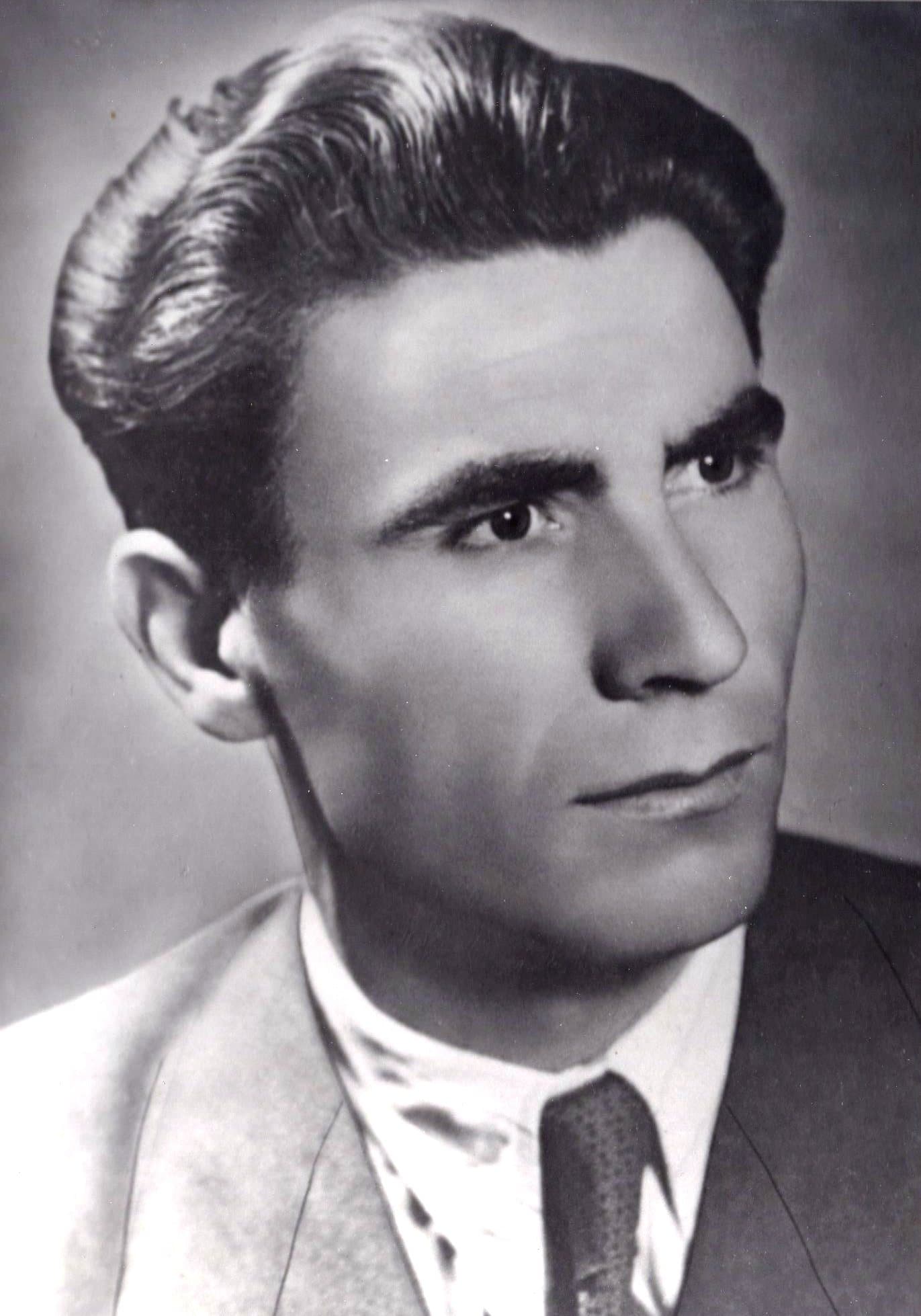
Lazar Koliševski (Macedonian: Лазар Колишевски [ˈlazar kɔˈliʃɛfski] ; 12 February 1914 – 6 July 2000) was a Macedonian Yugoslav communist political leader in the Socialist Republic of Macedonia and briefly in the Socialist Federal Republic of Yugoslavia. He was closely allied with Josip Broz Tito.
Lazar Koliševski (Macedonian: Лазар Колишевски [ˈlazar kɔˈliʃɛfski] ; 12 February 1914 – 6 July 2000) was a Macedonian Yugoslav communist political leader in the Socialist Republic of Macedonia and briefly in the Socialist Federal Republic of Yugoslavia. He was closely allied with Josip Broz Tito.
0 comentarii0 reacții
Lazar Koliševskia adăugat o fotografie
acum 3 luni
R.I.P Lazar
Early years
Koliševski was born on 12 February 1914 in Sveti Nikole, Kingdom of Serbia (now North Macedonia), into a poor family. His mother was an Aromanian, while his father was Slavic. According to Kosta Tsarnushanov, a MMTRO member and historian, his father was a Serboman. In 1915, during the First World War, the region of Macedonia was occupied by the Kingdom of Bulgaria. His father was mobilized on the Salonica front, and during the war, both of Koliševski's parents died. Once left an orphan, he was taken by his aunts and sent to an orphanage. In 1928, he enrolled into a technical school in Kragujevac, where left-wing activism flourished. Here, he befriended future Yugoslav politicians Aleksandar Ranković and Boris Mijoski. Koliševski became influenced by communism. He graduated from a trade school in Kragujevac in 1932 and worked as a metalworker, while also joining the League of Communist Youth of Yugoslavia. In 1935, he joined the Communist Party of Yugoslavia (CPY). He went to study at the University of Belgrade and worked as party secretary in Kragujevac and Smederevo Palanka before World War II.
0 comentarii0 reacții
Lazar Koliševskia adăugat o fotografie
acum 3 luni
R.I.P Lazar
World War II As Nazi forces entered Belgrade in April 1941, Bulgaria, a German ally, took control of a part of Vardar Macedonia, with the western towns of Tetovo, Gostivar and Debar became part of the Italian zone in Albania. After the Bulgarians had taken control of the eastern part of the former Vardar Banovina, the leader of the local faction of Communist Party of Yugoslavia, Metodi Shatorov had defected to the Bulgarian Communist Party (BCP). Koliševski was sent by CPY to Macedonia to replace the leadership of the Regional Committee, as well as challenge the influence of BCP. Koliševski conducted the policy of CPY in Macedonia. After the attack on the Soviet Union by Germany and the intervention of the Comintern, the Macedonian communist movement fell into the hands of the Yugoslav Macedonians led by him, who was pro-Serbian. He also had the task of organizing an armed resistance. In September 1941, Koliševski became the Secretary of the Regional Committee of the Communists in Macedonia. He created the first partisan detachments in Vardar Macedonia, however they were poorly trained and organized, and were easily defeated by the Bulgarian army. After the communist attack on the Bulgarian police station in…
0 comentarii0 reacții
Lazar Koliševskia adăugat o fotografie
acum 3 luni
R.I.P Lazar
Yugoslavia In mid-September 1944, Yugoslav leader Josip Broz Tito sent Svetozar Vukmanović and him to Sofia to meet with the Central Committee of the Bulgarian Communist Party to discuss the Macedonian Question. They blamed the Bulgarian communists for their actions during the war in Macedonia and demanded a union of Pirin Macedonia with the new Yugoslav Macedonia. On 16 April 1945, he became the first President of the Executive Council of the People's Republic of Macedonia. Under his leadership, hundreds of Macedonian Bulgarians were killed as collaborationists in January 1945. Thousands of others, who retained their pro-Bulgarian sympathies, suffered severe repression as a result. After Metodija Andonov-Čento's incarceration in November 1946, he also initiated the purging of real or alleged Čentovites and Cominformists from the party and government. During his leadership, LCM was also committed to Yugoslav centralism. The communist Macedonian leaders were declared atheists but they still saw the importance of religion and church in the construction of a nation. During efforts by the Yugoslav Macedonian government to keep Serbs out of the administration, Koliševski stated that it was not necessary for Serbs to be in the civil services as there were enough Macedonians, while also claiming that Serbian…
0 comentarii0 reacții
Lazar Koliševskia adăugat o fotografie
acum 3 luni
R.I.P Lazar
Republic of Macedonia
After the breakup of Yugoslavia, Koliševski lived in Skopje, the capital of the newly-proclaimed Republic of Macedonia, and opposed the anti-Serbian and pro-Bulgarian policy of the ruling right-wing party, VMRO-DPMNE, in the late 1990s. Nationalists in Ohrid demanded that he be hanged. He died on 6 July 2000. Shortly after, his personal archive of 300,000 documents was given to the Macedonian Academy of Arts and Sciences. In 2002 a monument of Koliševski was erected in his birthplace by the left-wing local government. Krste Crvenkovski and Slavko Milosavlevski challenged the belief that he had a significant role in the communist resistance during World War II.