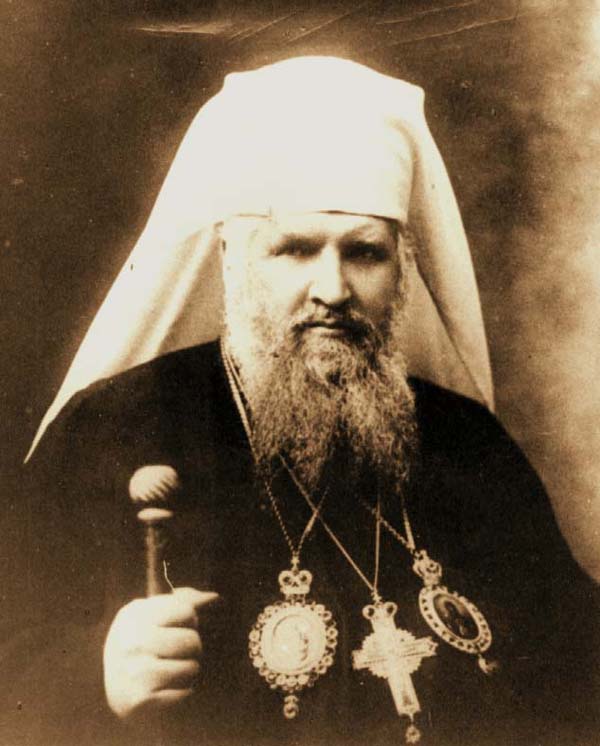
Andrey Sheptytsky OSBM (Polish: Andrzej Szeptycki; Ukrainian: Андрей Шептицький, romanized: Andrey Sheptytsky; 29 July 1865 – 1 November 1944) was a prelate and theologian of the Ukrainian Greek Catholic Church who served as Metropolitan of Galicia and Archbishop of Lviv from 1901 until his death in 1944. His tenure in office spanned two world wars and seven political regimes: Austrian, Russian, Ukrainian, Polish, Soviet, Nazi German, and again Soviet. He was born as Roman Szeptycki in Prylbychi, a village outside of Lviv in Austrian Galicia, to on his father's side the Roman Catholic Szeptyck
Actualizări recente
Andrei Șeptițchia publicat o actualizare
acum 6 ore
World War II After the German invasion of Poland, Sheptytsky issued a pastoral letter appealing not to succumb to propaganda. On October 9, 1939, after the Soviets took over eastern Poland, without the consent of the Holy See, he created a new territorial division of the Greco-Catholic Church on the territory of the USSR. During the Soviet rule, he tried to keep the Greco-Catolics out of control by the Soviet state. He protested the atheization of youth, organized synods and secretly ordained bishops. He also contacted the Polish underground (ZWZ) to ease Polish-Ukrainian relations. Sheptytsky welcomed the Wehrmacht entering Lviv and supported the OUN-B's declaration of Ukrainian independence on June 30, 1941. After the dissolution of Yaroslav Stetsko's government, he became honorary chairman of the Ukrainian Council of Seniors. On July 22, 1941, in a letter to Joachim von Ribbentrop, Germany's foreign minister, he protested against the annexation of Eastern Galicia to the General Government. In August 1941, he assumed the protectorate of the newly established Ukrainian Red Cross. Gradually, he developed a dislike for the Nazi Party, being disgusted by their policies toward the civilian population. In June 1942, he promulgated the document The Ideal of Our National Life,…
0 comentarii4 vizualizări0 reacții
Andrei Șeptițchia adăugat o fotografie
acum 6 ore
R.I.P Andrei
Sheptytsky became a novice at the Basilian monastery in Dobromyl on May 29, 1888. He took the name Andrey, after the younger brother of Saint Peter, Andrew the Apostle, considered the founder of the Byzantine Church and also specifically of the Ukrainian Church. Beginning in 1889, he studied Ukrainian there under Wojciech Baudiss. He then studied at the Jesuit College in Kraków, passing the exam in 1894. Sheptytsky became a professed member of the Order of Saint Basil the Great on August 13, 1889, and took his solemn vows on August 11, 1892. He was ordained a deacon and a priest on August 27 and 28, 1892, in Przemyśl. He was made hegumen of the Monastery of St Onuphrius in Lviv in 1896. In 1898, he took up the post of professor of moral and dogmatic theology at the Basilian seminary in Krystynopol. There he founded the Studite Order, based on the rule of St. Theodore the Studite, which had been introduced to the Kievan Rus' in the 11th century. The formation of the Studite order was part of Sheptytsky's effort to restore Byzantine traditions within the Ukrainian Church and to link modern monasticism with the historic Kievan Rus'. He…
0 comentarii4 vizualizări0 reacții
Andrei Șeptițchia publicat o actualizare
acum 6 ore
Further reading Himka, John-Paul (2014). "Metropolitan Andrey Sheptytsky and the Holocaust". Polin: Studies in Polish Jewry. 26: 337–359. ISSN 0268-1056. Himka, John-Paul (2012). "Christianity and Radical Nationalism: Metropolitan Andrei Sheptytsky and the Bandera Movement". In Wanner, Catherine (ed.). State Secularism and Lived Religion in Soviet Russia and Ukraine. Woodrow Wilson Center Press with Oxford University. ISBN 9780199937639. Cyrille Korolevskij, Metropolitan Andrew (1865–1944), Translated and Revised by Serge Keleher, Stauropegion, 1993, Lviv. Krawchuk, Andrii (1997). Christian Social Ethics in Ukraine: The Legacy of Andrei Sheptytsky . Ottawa, Ont: Sheptytsky Institute. Edmonton: Canadian Institute of Ukrainian Studies Press. ISBN 978-1895937046. Krawchuk, Christian (1990). Social theory and Christian praxis in the writings of Metropolitan Andrei Sheptytsky, 1899-1944. Dissertation Abstracts International. Vol. 52–11, Section: A. Ottawa: University of Ottawa. doi:10.20381/ruor-10871. Krasnodemska, Iryna (2022). "The Role of Metropolitan Andrei Sheptytskyi in the Formation of Ukrainian National Identity". Occasional Papers on Religion in Eastern Europe. 42 (2). doi:10.55221/2693-2148.2395. Redlich, Shimon. "Metropolitan andrei sheptyts'kyi, Ukrainians and jews during and after the holocaust". Holocaust and Genocide Studies. 5 (1): 39–51. doi:10.1093/hgs/5.1.39. Weiss Aharon, Andrei Sheptytsky in Encyclopedia of the Holocaust vol. 4, pp. 1347–8 Wawrzonek, Michał (2023). Memory, Politics and Legacy of Metropolitan Andrey Sheptytsky (PDF). Krakow: Ignatianum…
0 comentarii4 vizualizări0 reacții
Andrei Șeptițchia adăugat o fotografie
acum 6 ore
R.I.P Andrei
Early life and education He was born as Count Roman Aleksander Maria Szeptycki in Prylbychi, a village 40 km west/northwest of Lviv, in the Kingdom of Galicia and Lodomeria, then a crownland of the Austrian Empire. His parents were Jan Kanty Szeptycki and Zofia née Fredro. The Szeptycki family was part of the Polish szlachta of Ruthenian origin. The maternal Fredro family was descended from the Polish nobility and, through his mother, the future Metropolitan Bishop was the grandson of Polish Romantic poet Aleksander Fredro. The Szeptycki family produced a number of bishops of both Catholic rites, most notably in the 18th century. Greek Catholic Bishops of Lviv and Metropolitans of Kiev were: Athanasius and Leo, Barlaam Bazyli was also bishop of Lviv. Atanazy Andrzej was a Greek Catholic bishop of Przemyśl and Nikifor was archimanrite of Lavriv. The Latin Catholic Bishop of Płock was Hieronim Antoni Szeptycki, while his nephew Marcin was elected to the position, but did not take it. One of his brothers, Klymentiy Sheptytsky, M.S.U., became a Studite monk, and another, Stanisław Szeptycki, became a General in the Polish Army. He was 2 m 10 cm (6 ft. 10 in.) tall.
0 comentarii4 vizualizări0 reacții
Andrei Șeptițchia adăugat o fotografie
acum 6 ore
R.I.P Andrei
Andrey Sheptytsky OSBM (Polish: Andrzej Szeptycki; Ukrainian: Андрей Шептицький, romanized: Andrey Sheptytsky; 29 July 1865 – 1 November 1944) was a prelate and theologian of the Ukrainian Greek Catholic Church who served as Metropolitan of Galicia and Archbishop of Lviv from 1901 until his death in 1944. His tenure in office spanned two world wars and seven political regimes: Austrian, Russian, Ukrainian, Polish, Soviet, Nazi German, and again Soviet. He was born as Roman Szeptycki in Prylbychi, a village outside of Lviv in Austrian Galicia, to on his father's side the Roman Catholic Szeptycki family who were part of the Polish szlachta (nobility) of Ruthenian origin, and on his mother's side to the very famous in Poland Fredro family, who also were part of the Roman Catholic Polish szlachta. Although he was baptized in the Latin Church, Sheptytsky joined the Greek-Catholic Order of Saint Basil the Great in 1888, and took the monastic name Andrey. In 1892 he took his solemn vows and was also ordained to the deaconate and the priesthood. He went on to serve as a hegumen and seminary professor in the Basilian Order. In 1899 Sheptytsky was nominated by Emperor Franz Joseph to become the Bishop…
0 comentarii4 vizualizări0 reacții
Andrei Șeptițchia publicat o actualizare
acum 6 ore
Sheptytsky in the early years of his episcopacy expressed strong support for a celibate Eastern Catholic clergy. Yet he said to have changed his mind after years in Imperial Russian prisons where he encountered the faithfulness of married Russian and Ukrainian Orthodox priests and their wives and families. After this, he fought Latin Catholic leaders who attempted to require clerical celibacy among Eastern Catholic priests. Sheptytsky was also a patron of artists, students, including many Orthodox Christians, and a pioneer of ecumenism—he also opposed the Second Polish Republic's policies of linguistic imperialism, coercive Polonisation, and the forced conversion of Greek Catholic and Orthodox Ukrainians into Latin Rite Catholics. He strove for reconciliation between ethnic groups and wrote frequently on social issues and spirituality. Despite being born into wealth, he chose to live a life of poverty. He also founded the Studite and Ukrainian Redemptorist orders, a free hospital, the National Museum, and the Theological Academy. He actively supported various Ukrainian organizations such as the Prosvita and in particular, the Plast Ukrainian Scouting Organization, and donated a campsite in the Carpathian Mountains called Sokil and became the patron of the Plast fraternity Orden Khrestonostsiv.
0 comentarii4 vizualizări0 reacții
Andrei Șeptițchia adăugat o fotografie
acum 6 ore
R.I.P Andrei
Sheptytsky was baptized in the Roman rite at the parish church in Bruchnal (today Ternovytsia). Sheptytsky received his education first at home and then in Lviv and later in Kraków. He graduated from the St. Anna gymnasium in Kraków on 11 June 1883. His confessor was Jesuit Henry Nostitz-Jackowski, who was carrying out the reform of the Greek Catholic Basilian Order in Galicia. Probably under his influence, Sheptyskiy made the decision to join the Basilians, which, however, provoked opposition from his father. Hence in 1883 he went to serve in the Austro-Hungarian Army but after a few months he fell sick and was forced to abandon it. Instead, he went to study law in Breslau. There he was a member of the Literary and Slavic Society run by Władysław Nehring, as well as the Upper Silesian Society and the Polish Academicians' Reading Room. With his brother Alexander, he founded the Polish-Catholic Student Theological Society "Societas Hosiana" in 1884. From the 1885/6 academic year, he continued his studies at the Jagiellonian University in Kraków, at which time he changed his nationality declaration from "Polish" to "Ruthenian". In April and May 1886 he visited Rome. From November to December 1887 he stayed…
0 comentarii4 vizualizări0 reacții
Andrei Șeptițchia publicat o actualizare
acum 6 ore
After the outbreak of World War I, Sheptytsky proposed eventual creation of the Ukrainian state out of the Russian territories, he also appealed to believers to stay loyal to the emperor of Austria. When Russians entered Lviv Sheptytsky voluntarily agreed to become a hostage, but his offer was refused by the newly appointed Russian military governor. Soon thereafter, Aleksei Brusilov, commander of the Russian 8th Army, appointed the metropolitan responsible for public order in the city. However, on September 15, 1914, Sheptytskyi was put under house arrest, and in a few days sent to Kyiv, where he arrived on 21 September. While staying there he tried to recreate the Union by consecrating Josyf Botsyan as bishop of Lutsk. For this activity, he was deported to Nizhny Novgorod, then Kursk, after that to monastery of Saint Euthymius in Suzdal and finally to Yaroslav. During his time in exile Sheptytsky spent time reading and bought a number of antique items for the National Museum in Lviv. He was allowed to pray and regularly visited a Catholic church for confession. Released in March 1917 by the Russian Provisional Government, Sheptytsky left for Petrograd for medical treatment, and later visited Kyiv, where he served…
0 comentarii4 vizualizări0 reacții
Andrei Șeptițchia publicat o actualizare
acum 6 ore
Interwar period Sheptytsky again visited the United States in 1920. In 1921 he was appointed apostolic visitor by the Pope, representing Vatican before the Red Cross and other humanitarian organizations tasked with aiding orphans and other victims of the recent war. In the United States the metropolitan had an audience with president Warren G. Harding and met with Ukrainian diplomats, voicing his opposition to the annexation of Eastern Galicia to Poland. As a result, Polish authorities started collecting compromising information against Sheptytskyi and the Polish press declared him a traitor, despite the fact that the metropolitan's own brother Stanisław was serving as the country's defence minister during that time. Fearing Sheptytskyi's influence in Galicia, Polish authorities offered the Vatican to appoint him to a position in Rome or in North America. Nevertheless, Sheptytskyi took a decision to return, an in August 1923 crossed the Polish border. Immediately thereafter he was arrested and spent six weeks isolated in Poznań. Finally, after a meeting with Polish president Stanisław Wojciechowski, the metropolitan was allowed to proceed to Lviv, where he arrived in early October. Between 1923 and 1935 Sheptytskyi sponsored an art school in Lviv, which was established by painter Oleksa Novakivskyi and…
0 comentarii4 vizualizări0 reacții
Andrei Șeptițchia publicat o actualizare
acum 6 ore
Sheptytsky maintained contacts with the Polish underground and tried to mediate in the Polish-Ukrainian conflict. In the autumn of 1941, he met with Jerzy Braun, an envoy of Government Delegate for Poland Cyryl Ratajski and General Stefan Rowecki, Commander-in-Chief of the ZWZ, to whom he made a proposal to delegate two Ukrainian representatives to the National Council in London. Sheptytsky was aware of the ongoing genocide of the Polish population organized by the forces of OUN-B and the UPA since the summer of 1943. He did not condemn it outright, but in a pastoral letter of August 10, 1943, he called for saving the lives of those in danger, and in another of August 31, he urged both sides to stop fighting. In early 1944, he condemned the killings and their perpetrators, regardless of their motives. In a "word for Easter" dated April 16, 1944, he called for harmony between neighbors. During this period he secretly consecrated Josyf Slipyj as his successor. Sheptytsky died on November 1, 1944, and was buried in St. George's Cathedral in Lviv. Due to the metropolitan's high authority in Galicia, the Soviets were forced to allow a public funeral, which was attended by thousands of…
0 comentarii4 vizualizări0 reacții
Andrei Șeptițchia publicat o actualizare
acum 6 ore
Jews who were saved thanks to actions of Andrey Sheptytsky have lobbied Yad Vashem for years to have him named Righteous Among the Nations, just as his brother Klymentiy Sheptytsky had been, but so far Yad Vashem has not done so, mostly due to concerns with his initial belief that German invaders would be better for Ukraine than the Soviet Union had been. In 1958 the cause for his canonization was begun, but stalled at the behest of Cardinal Stefan Wyszynski. Pope Francis approved his life as being one of heroic virtue on 16 July 2015, thus proclaiming him to be Venerable, the first step towards sainthood. The first monument to Metropolitan Andrey Sheptytsky was erected during his lifetime in 1932. It was destroyed by the Soviets in 1939. A new monument to Metropolitan Andrey Sheptytsky was inaugurated in Lviv on 29 July 2015, the 150th anniversary of his birth. The Lviv National Museum, founded by Sheptytsky in 1905, now bears his name. The Information-Resource Center of the Ukrainian Catholic University that was opened in September 2017 also bears his name — The Metropolitan Andrey Sheptytsky Center. On 23 August 2024, the 103rd Territorial Defense Brigade of the Armed Forces…
0 comentarii4 vizualizări0 reacții
Andrei Șeptițchia publicat o actualizare
acum 6 ore
Literature Katchanovski, Ivan; Kohut, Zenon E.; Nebesio, Bohdan Y.; Yurkevich, Myroslav, eds. (2013). Historical Dictionary of Ukraine. The Scarecrow Press. ISBN 978-0-8108-7847-1. Magocsi, Paul Robert, ed. (1989). Morality and Reality: The Life and Times of Andrei Sheptyts'kyi. Canadian Institute of Ukrainian Studies. ISBN 0-920862-68-3. Mykhaleyko, Andriy (2024). "The "Invention" of Eastern Catholic Tradition". In Summerson, Andrew J.; Kennedy, Cyril (eds.). Eastern Catholic Theology In Action: Essays in Liturgy, Ecclesiology, and Ecumenism. The Catholic University of America Press. ISBN 978-0-8132-3900-2. Yurkevich, Myroslav (1986). "Galician Ukrainians in German Military Formations and in the German Administration". In Yury Boshyk (ed.). Ukraine During World War II: History and Its Aftermath. Canadian Institute of Ukrainian Studies, University of Alberta. ISBN 978-0-920862-36-0.