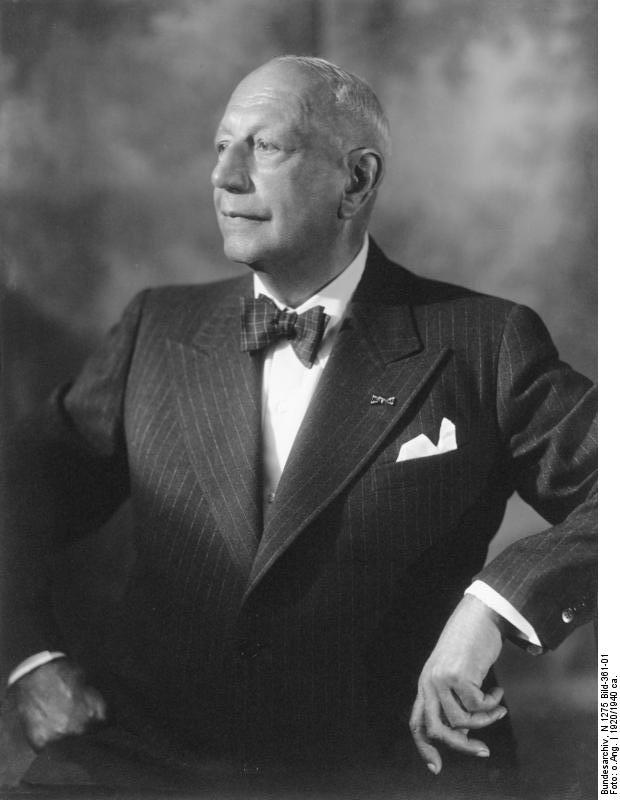
Oskar Messter (21 November 1866 – 6 December 1943) was a German inventor and film tycoon in the early years of cinema. His firm Messter Film was one of the dominant German producers before the rise of UFA, into which it was ultimately merged.
Actualizări recente
Oskar Messtera publicat o actualizare
acum 6 ore
The slow motion photograph of the blossoming of flowers in early 1897. Various experiments in microscopic cinematography made between 1900 and 1910. Construction of the first film studio in Germany in 1900, which had artificial lighting with four lamps, where you could work independently of sunlight and time. In 1901, he moved the studio to another very similar location due to the space available. Later, in 1905 Messter adapted a glass atelier or workshop as a cinema studio with double height and adjacent rooms to store the sets and costumes of each performance. In this new study, he did depend on natural lighting, although he gradually began to use arc reflectors that allowed him to work with a mixed light. However, after some years this study proved insufficient and he rented two more floors to build a hanging structure, which had an electric motor to move the reflectors or the cameras around the stage. The first projections voiced in Germany in 1903. The equipment of its electromechanical synchronization system with the Tonbilder biophon in more than 500 cinemas between 1905 and 1913. It was an electromechanical synchronization mechanism that consisted of an electrical system that operated at the same speed…
0 comentarii2 vizualizări0 reacții
Oskar Messtera publicat o actualizare
acum 6 ore
Early sound films From 1896, Messter was interested in the search of a method of reproduction and synchronization of the sound effects of the cinematographic performance at the time of the "silent movies". So Messter invented the Tonbilder Biophon to show films, in which a gramophone played "Unter den Linden" accompanying the projection of animated images, but it was not a simple "accompaniment" but to precisely match the series of musical pieces with moving images. In effect, to add sound to the silent cinema it was necessary to solve problems of synchronization, since the image and the sound were recorded and reproduced by separated devices, which were difficult to initiate and to maintain rigged. On August 31, 1903, Messter held the first sound projection that took place in Germany at the "Apollo" Theater in Berlin. The inventor of the Biophon can be congratulated of belonging to the modern world. Until 1907 the Tonbilder branch of the German film industry was dominated by Oskar Messter, who had reached the following agreement with Léon Gaumont that Gaumont would not supply Phonoscènes to Germany and Messter would not provide Tonbilder biophons to France, and that their respective devices would be sold by a…
0 comentarii2 vizualizări0 reacții
Oskar Messtera adăugat o fotografie
acum 6 ore
R.I.P Oskar
Oskar Messter (21 November 1866 – 6 December 1943) was a German inventor and film tycoon in the early years of cinema. His firm Messter Film was one of the dominant German producers before the rise of UFA, into which it was ultimately merged.
0 comentarii2 vizualizări0 reacții
Oskar Messtera publicat o actualizare
acum 6 ore
Biography Oskar Messter was born on November 21, 1866, in Berlin, where his father had founded in 1859 a company called Optisches und Mechanisches Institut Ed. Messter. This company manufactured and sold eyeglasses, precision medical devices, optical devices for magicians and show businessmen, electric reflectors for theaters, and projectors for the magic lantern. Being integrated in this world since he was a child, Oskar acquired both business, optical and mechanical skills, which he later applied in cinematography. In 1892, his father's workshops became part of Oskar and he began to carry out his own experiments. Following in the footsteps of Filoteo Alberini with the kinetograph, Robert William Paul with the theatrograph, Birt Acres with the magic lantern in 1896, among many others, Messter managed to develop his first projector to retransmit films of Thomas Alva Edison's kinetoscope. Later, he was chosen to repair a theatrograph, but abandoned it to focus on a better development of the kinetoscope, first adding a "Geneva drive" on the projectors to oscillatingly cause intermittent movement to advance the frames of the film. That being the case, on June 15, 1896, Oskar sold his first device. But Messter was not the only producer of film projectors…
0 comentarii2 vizualizări0 reacții
Oskar Messtera publicat o actualizare
acum 6 ore
Contributions Oskar Messter was characterized for having an innovative mentality that he knew how to apply to the exploration of the new medium of cinematography, whether for scientific purposes or for commercial purposes. Among his most indicated contributions are:
0 comentarii2 vizualizări0 reacții
Oskar Messtera publicat o actualizare
acum 6 ore
Literature Loiperdinger, M. (Ed.): Oskar Messter: Filmpionier der Kaiserzeit and Oskar Messter, Erfinder und Geschäftsmann, KINtop Schriften 2 & 3, Stroemfeld/Roter Stern; Basel, 1994. In German. Messter, O.: Mein Weg mit dem Film, Berlin, 1936. Also in German.