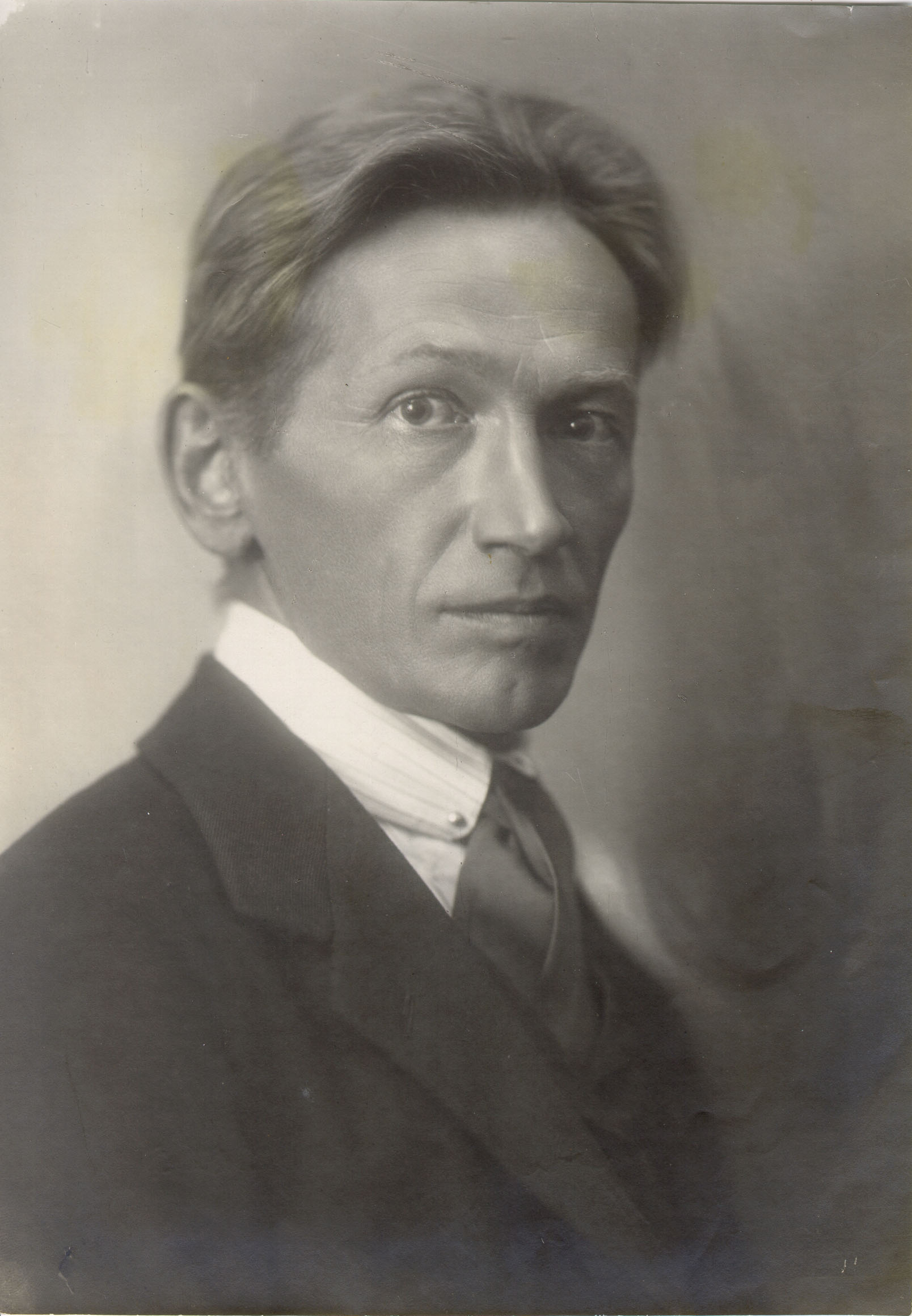
Oton Župančič (pronounced [ˈoːtɔn ʒuˈpáːntʃitʃ]; January 23, 1878 – June 11, 1949; pseudonym Gojko [ˈɡóːjkɔ]) was a Slovene poet, translator, and playwright. He is regarded, alongside Ivan Cankar, Dragotin Kette and Josip Murn, as the beginner of modernism in Slovene literature. In the period following World War I, Župančič was frequently regarded as the greatest Slovenian poet after Prešeren, but in the last forty years his influence has been declining and his poetry has lost much of its initial appeal.
Actualizări recente
Oton Župančiča adăugat o fotografie
acum 6 ore
R.I.P Oton
Oton Župančič (pronounced [ˈoːtɔn ʒuˈpáːntʃitʃ]; January 23, 1878 – June 11, 1949; pseudonym Gojko [ˈɡóːjkɔ]) was a Slovene poet, translator, and playwright. He is regarded, alongside Ivan Cankar, Dragotin Kette and Josip Murn, as the beginner of modernism in Slovene literature. In the period following World War I, Župančič was frequently regarded as the greatest Slovenian poet after Prešeren, but in the last forty years his influence has been declining and his poetry has lost much of its initial appeal.
0 comentarii1 vizualizări0 reacții
Oton Župančiča adăugat o fotografie
acum 6 ore
R.I.P Oton
Biography He was born Oton Zupančič in the village of Vinica in the Slovene region of White Carniola near the border with Croatia. His father Franc Zupančič was a wealthy village merchant, his mother Ana Malić was of Croatian origin. He attended high school in Novo Mesto and in Ljubljana. In the Carniolan capital, he initially frequented the circle of Catholic intellectuals around the social activist, author and politician Janez Evangelist Krek, but later turned to the freethinking circle of young Slovene modernist artists, among whom were Ivan Cankar, Dragotin Kette and Josip Murn. In 1896, he went to study history and geography at the University of Vienna. He stayed in Vienna until 1900, but never completed his studies. In the Austrian capital, he became acquainted with the contemporary currents in European art, especially the Viennese Secession and fin de siècle literature. He also met with Ruthenian students from eastern Galicia who introduced him to Ukrainian folk poetry, which had an important influence on Župančič's future poetic development. In 1900, he returned to Ljubljana, where he taught as a substitute teacher at the Ljubljana Classical Gymnasium. He started to publish his poetry in the liberal literary magazine Ljubljanski zvon, where…
0 comentarii1 vizualizări0 reacții
Oton Župančiča publicat o actualizare
acum 6 ore
Work Župančič published his first collection of poems in 1899 under the title Čaša opojnosti (The Goblet of Inebriation). The collection, published at the same time and by the same publisher as Cankar's controversial book Erotika (Eroticism), was a compendium of poems from Župančič's earlier periods, when he was strongly influenced by the decadent movement. The two books marked the beginning of modernism in Slovenian literature and caused a controversy. All issues of Cankar's Erotika were bought by the Ljubljana Bishop Anton Bonaventura Jeglič and destroyed, and Župančič's Čaša opojnosti was condemned by the most renowned Slovene conservative thinker of the time, the neo-thomist philosopher Aleš Ušeničnik. Župančič's later poems showed little influence of decadentism, but remained close to a vitalist and pantheist vision of the world and nature. He gradually turned from pure subjective issues to social, national, and political concerns. Already in 1900, he published the highly influential poem Pesem mladine (The Song of Youth), on the occasion of the centenary of Prešeren's birth, written as a battle song of his generation. In his masterpiece Duma from 1908, the visions of an idyllic rural life and natural beauty are mixed with implicit images of social unrest, emigration, impoverishment,…
0 comentarii1 vizualizări0 reacții
Oton Župančiča publicat o actualizare
acum 6 ore
Already during his lifetime, Župančič was frequently accused of being excessively pragmatic and a political opportunist. In the 1920s, he was a staunch supporter of the cultural policies of the Yugoslav monarchy, which aimed to create a unified Yugoslav nation. After 1929, he supported the centralist dictatorship of King Alexander of Yugoslavia. In 1932, he published an article in the journal Ljubljanski zvon entitled "Louis Adamic and Slovene Identity", in which he claimed that the Slovenes should not be too preoccupied about their language because they can keep their identity even if they lose the language. The article, published in a period when the Yugoslav authorities were sponsoring the official use of Serbo-Croatian in the Drava Province and when even the name Slovenia was officially banned, caused a huge controversy and a split in the journal Ljubljanski zvon. The literary critic Josip Vidmar rejected Župančič's views in his well-known polemic book The Cultural Problem of Slovene Identity. Although Župančič remained a monarchist and Yugoslav nationalist until the invasion of Yugoslavia in April 1941, he welcomed the new communist regime after 1945. After 2000, several interpretations of his poem "Zlato jabolko" (The Golden Apple), written in September 1943, were used in…
0 comentarii1 vizualizări0 reacții
Oton Župančiča publicat o actualizare
acum 6 ore
Influence and legacy During most of his lifetime, Župančič was regarded as a great author. He enjoyed the status of the national poet second only to France Prešeren. In 1931, the French linguist Lucien Tesnière published a book on Župančič (Oton Joupantchhitch: poète slovène. L'homme et l'oeuvre), which was important for the popularization of Župančič's poetry in France. During his lifetime, his works were only translated into French and Serbo-Croatian. Translations into German, English, Hungarian (by Sándor Weöres), Macedonian, Romanian, Bulgarian, Czech, and Slovak have been published since. Slovene composer Breda Šček set Župančič's works to music. Župančič has had relatively little influence on the younger generations of Slovene authors. Nevertheless, many of his verses and utterances have become catchphrases or common cultural references. Today, he is still very popular as an author of children's literature. His collection of children's poetry called Ciciban (also known as Mehurčki 'Bubbles') has been published in more than 30 editions since it was first issued in 1915. Numerous streets, public buildings, and institutions in Slovenia, Serbia (mostly in Autonomous Province of Vojvodina) as well as in Slovene-inhabited areas of Italy and Austria are named after him.
0 comentarii1 vizualizări0 reacții
Oton Župančiča publicat o actualizare
acum 6 ore
Janez Mušič, Oton Župančič: življenje in delo (Ljubljana: Mladika, 2007) Boštjan M. Turk, Recepcija bergsonizma na Slovenskem (Ljubljana: Filozofska fakulteta Univerze v Ljubljani, 1995)