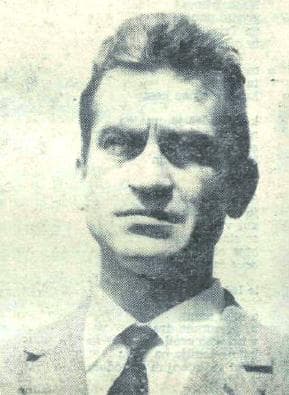
Rudi Šeligo (pronounced [ˈɾúːdi ʃɛˈlìːɡɔ]; 14 May 1935 – 22 January 2004) was a Slovenian writer, playwright, essayist and politician. Together with Lojze Kovačič and Drago Jančar, he is considered one of the foremost Slovenian modernist writers of the post-World War II period.
0 comentarii9 vizualizări0 reacții
Rudi Šeligoa adăugat o fotografie
acum 8 zile
R.I.P Rudi
Life Šeligo was born in a Slovene family in Sušak, Kingdom of Yugoslavia, now part of the city of Rijeka, Croatia. In 1939, he moved with his family to the industrial town of Jesenice in north-western Slovenia. After finishing high school, he worked as an industrial worker in the local iron mill for few years. He then moved to the small town of Tolmin, where he finished a teacher's academy. In 1956, he moved to Ljubljana, where he enrolled in the University of Ljubljana, studying philosophy and sociology. In Ljubljana, Šeligo became involved with a group of young and intellectuals known as the Critical generation. He published several short stories in the alternative literary journal Revija 57. He became friends with the dissident intellectual Jože Pučnik, and witnessed his arrest in 1958. In 1962, he became a lecturer at the School for Sociology and Working Management in Kranj, and continued publishing his works, mostly in the alternative journal Perspektive. When the journal was forced to close down by the Communist regime, Šeligo entered a "creative strike", refusing to publish any of his works for two years. In the late 1960s, he started collaborating the renowned literary theorists and philosopher Dušan…
0 comentarii9 vizualizări0 reacții
Rudi Šeligoa lăsat un gând
acum 8 zile
Work
In the 1950s, Šeligo was among those who brought radical avantgardist innovations to the Slovenian literature. His short novel "The Triptych of Agata Schwarzkobler" (Triptih Agate Schwarzkobler), published in 1968, is considered the first example of reism in Slovene literature. His early novels were under the influence of the French Nouveau roman, and were characterized by thick descriptions and anti-psychologic attitude.