

Tadeusz Baird a adăugat o fotografie
acum 3 luni
R.I.P
Tadeusz
Tadeusz
Tadeusz Baird (26 July 1928 – 2 September 1981) was a Polish composer.
0 comentarii0 reacții
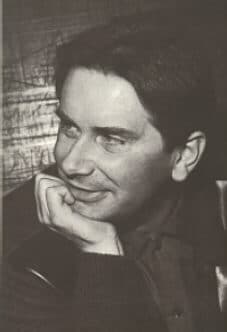 🔍 Mărește
In memoriam
Tadeusz Baird (26 July 1928 – 2 September 1981) was a Polish composer.
Tadeusz Baird a adăugat o fotografie
acum 3 luni
Tadeusz Baird (26 July 1928 – 2 September 1981) was a Polish composer.
Tadeusz Baird a adăugat o fotografie
acum 3 luni
Biography Baird was born in Grodzisk Mazowiecki, in Poland. His father Edward was Polish, while his mother Maria (née Popov) was Russian. In 1944 at the age of 16 he was deported to Germany as a forced labourer, and after a failed escape attempt was imprisoned in a concentration camp. After liberation by the Americans he spent six months recovering at the military hospital in Zweckel before returning to Poland. Between 1947 and 1951 Baird studied composition and musicology in Warsaw under Piotr Rytek and Kazimierz Sikorski, and piano with Tadeusz Wituski. In 1949 he founded Group 49 along with Kazimierz Serocki and Jan Krenz. The aim of Group 49 was to write communicative and expressive music according to socialist realism, the dominant ideology in the Eastern Bloc at the time. After Stalin's death in 1953 he increasingly turned to serialism. In 1956, along with Kazimierz Serocki, he founded the Warsaw Autumn international contemporary music festival. In 1974 he began to teach composition at the National College of Music (currently the Music Academy) in Warsaw. In 1977, now a full professor, he was offered a post to teach a composition class at the Warsaw Academy of Music, and also membership…
Tadeusz Baird a lăsat un gând
acum 3 luni
Compositions He wrote both large-scale symphonies and chamber music; however, of great importance in his output are numerous vocal cycles inspired by poetry. He was also a composer of film and theatre music. Baird's music is usually melodic, lyrical, very expressive, and intensely subjective. It is often rooted in the post-Romantic tradition, despite the use of serial techniques. Alistair Wightman identifies Baird as "a late Romantic lyricist and successor not only to Berg, but Mahler and Szymanowski". Like Berg, his use of serialism was always very free and expressive, as in his String Quartet (1957). But the later works, starting with the 1966 one-act opera Jutro ("tomorrow", based on the short story by Joseph Conrad) become darker, particularly in the orchestral piece Psychodrama (1972) and in his final work, the song cycle for baritone and orchestra Głosy z oddali (‘Voices from afar’), which sets a bleak text by Jarosław Iwaszkiewicz on the subject of death and personal extinction. This change in perspective was a result of the traumatic experiences he faced during World War II and on into the early 1950s. Barbara Literska sees him as "a prophet of the future of music (postmodernity)".
Tadeusz Baird a lăsat un gând
acum 3 luni
Sonatina II (1952) for solo piano Little Suite for Children (1952) for solo piano
Tadeusz Baird a lăsat un gând
acum 3 luni
Chamber music Two Caprices for Clarinet and Piano (1953) (2nd Prize, Polish Composers' Union) Cztery Preludia [Four Preludes] for Bassoon and Piano (1954) Divertimento for Flute, Clarinet, Oboe, and Bassoon (1956)
Tadeusz Baird a lăsat un gând
acum 3 luni
Play for String Quartet (1971) Variations in Rondo Form for String Quartet (1978)
Tadeusz Baird a lăsat un gând
acum 3 luni
Sinfonietta (1949) Symphony I (1950) - Polish National Prize, 1951 Colas Breugnon: a suite in the old style for string orchestra with flute (1951)
Tadeusz Baird a lăsat un gând
acum 3 luni
Cassazione per orchestra (1956) Four Essays (1958) - UNESCO Prize, 1959
Tadeusz Baird a lăsat un gând
acum 3 luni
Sinfonia Breve (1968) Symphony III (1969) - National Prize, 1970
Tadeusz Baird a lăsat un gând
acum 3 luni
Piano Concerto (1949) Four Dialogs for oboe and chamber orchestra (1964) - UNESCO Prize 1966
Tadeusz Baird a lăsat un gând
acum 3 luni
Oboe Concerto (1973) Scenes for cello, harp and orchestra (1977) Concerto Lugubre (1975) for viola and orchestra
Tadeusz Baird a lăsat un gând
acum 3 luni
Vocal-instrumental works Four Love Sonnets for baritone and orchestra (1956) to texts by Shakespeare Exhortation for reciting voice and orchestra (1960) to old Hebrew texts Erotyki for soprano and orchestra (1961) to texts by Małgorzata Hilar Five Songs for mezzo-soprano and six instruments (1970) to texts by H. Poświatowska - National Prize, 1970 Goethe Letters: Cantata for Baritone for mixed choir and orchestra (1970) to texts by Goethe and Charlotta von Stein Głosy z oddali [Voices from Afar] for baritone and symphony orchestra (1981) to texts by J. Iwaszkiewicz (1981)
Tadeusz Baird a lăsat un gând
acum 3 luni
Opera Tomorrow, a musical drama to a libretto by J. S. Sito (1964-66)
Tadeusz Baird a lăsat un gând
acum 3 luni
Film Music Warsaw In Canaletto Paintings (Warszawa W Obrazach Canaletta) (1955)
Tadeusz Baird a lăsat un gând
acum 3 luni
April (Kwiecień) (1961) The Artillery Sergeant Kalen (Ogniomistrz Kalen) (1961)
Tadeusz Baird a lăsat un gând
acum 3 luni
Between The Shores (Między brzegami) (1962) Those Who Are Late (Spoznieni Przechodnie) (1962)