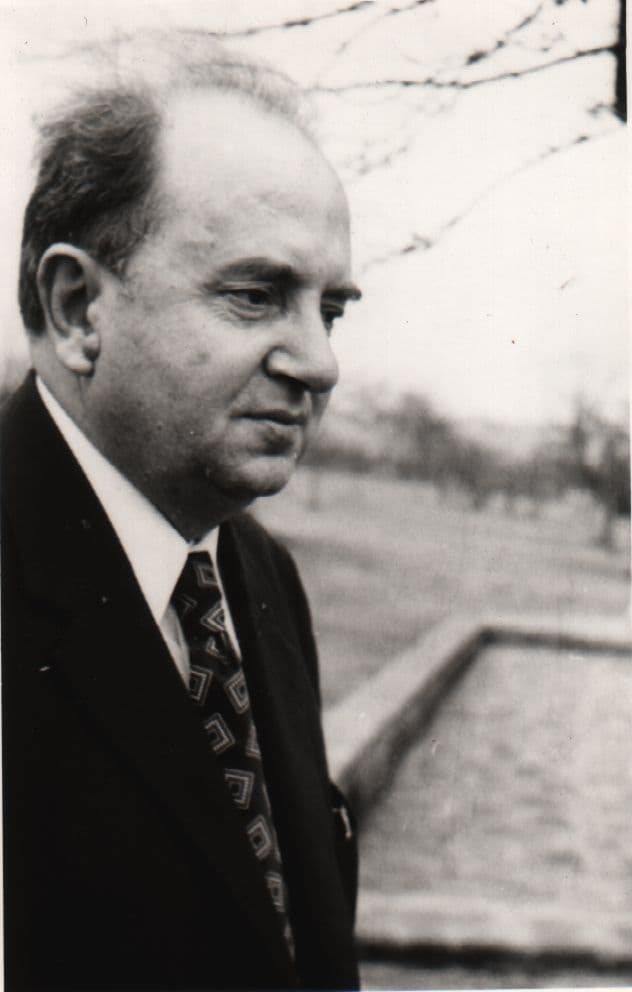
Venko Markovski (Bulgarian and Macedonian: Венко Марковски), born Veniyamin Milanov Toshev (Bulgarian: Вениямин Миланов Тошев, romanized: Veniyamin Milanov Toshev; Macedonian: Вениамин Миланов Тошев, romanized: Veniamin Milanov Tošev; March 5, 1915 – January 7, 1988), was a Bulgarian and Macedonian writer, poet, partisan and Communist politician. He participated in the Macedonian Literary Circle. Markovski contributed to the creation of a Macedonian literary language and alphabet. After the Tito–Stalin split in 1948, he sided with the Cominform, resulting in his imprisonment. After moving to B
Venko Markovski (Bulgarian and Macedonian: Венко Марковски), born Veniyamin Milanov Toshev (Bulgarian: Вениямин Миланов Тошев, romanized: Veniyamin Milanov Toshev; Macedonian: Вениамин Миланов Тошев, romanized: Veniamin Milanov Tošev; March 5, 1915 – January 7, 1988), was a Bulgarian and Macedonian writer, poet, partisan and Communist politician. He participated in the Macedonian Literary Circle. Markovski contributed to the creation of a Macedonian literary language and alphabet. After the Tito–Stalin split in 1948, he sided with the Cominform, resulting in his imprisonment. After moving to Bulgaria, he became active in the Bulgarian political scene and changed his national views.
0 comentarii0 reacții
Venko Markovskia adăugat o fotografie
acum 3 luni
R.I.P Venko
Biography Venko Markovski was born on March 5, 1915, in Skopje, Kingdom of Serbia, (present-day North Macedonia). Markovski completed his primary and secondary education in Skopje, later studying Slavic philology in Sofia University. Markovski was a member of the Macedonian Literary Group for the creation of a Macedonian literary language, founded in Skopje in 1931. In 1934, as a student of a Serbian gymnasium, he was arrested due to anti-state activity. In 1937, he moved to Sofia. He signed his first poems in the same year with the name Venko Markovski. In 1938, he published the first contemporary book written in unstandardized Macedonian language, Narodni bigori (People's Bitterness). He published another poetry collection named "Oginot" (The Fire). From 1938, he participated in the Macedonian Literary Circle in Sofia, embracing its Macedonism. He was a member of the group until 1941. He became a member of the Bulgarian Communist Party (BCP) in 1941. During World War II, he participated in the anti-Axis movement in Bulgaria from 1941. In 1941 he was sent as a Communist activist to the concentration camp in Enikyoi by the Bulgarian police. Due to tuberculosis, with the intervention of Todor Pavlov, he was transferred to a sanatorium.…
0 comentarii0 reacții
Venko Markovskia lăsat un gând
acum 3 luni
Works and views Markovski had published works in both Bulgarian and Macedonian. He wrote several poetry collections, including Partizani (Partisans) and Robii (Imprisonments), in which he glorified communism, partisan struggle, and Tito. After moving to Bulgaria, he supported the Bulgarian historiography's stance on the Macedonian Question. In the early 1970s, he advovated for the reintroduction of the yat and the big yus in the Bulgarian alphabet. In his 1981 book Blood is Thicker than Water, he apologized for his participation in SR Macedonia and declared Bulgarian identity. Bulgarian communist leader Todor Zhivkov convinced him to write the book after the publication of the History of the Macedonian People by the Institute of National History in Skopje. Markovski accused Macedonian historians of making forgeries. He denounced the Macedonian national identity as a Serbian and Yugoslav forgery. In his 1984 book Goli Otok: The Island of Death in English, he described his experience in Goli Otok and the treatment of prisoners there. He also argued that Macedonian identity was a Bulgarian regionalism. In his outlook, he ended up being anti-Titoist, anti-Serb, and pro-Stalin. Markovski also wrote polemical anti-Yugoslav texts. His poetry in Macedonian was criticized by the Bulgarian anti-communist dissident of the…
0 comentarii0 reacții
Venko Markovskia lăsat un gând
acum 3 luni
Legacy
His wife was Filimena and he had two children, among them the writer Mile Markovski (1939–1975) and piano teacher Sultana. His two grandsons are the Internet pioneer Veni Markovski and journalist Igor Markovski.
By the late 1990s, writers and journalists aligned with VMRO-DPMNE denounced Koneski as a "Serbian agent" and glorified Markovski. Throughout his life, Markovski was a proponent of close Macedonian-Bulgarian cultural and political ties. After North Macedonia's independence, he was rehabilitated in 2006 and historians in public forums have stated that he had made a major contribution to the Macedonian national cause, despite his pro-Bulgarian views.
0 comentarii0 reacții
Venko Markovskia lăsat un gând
acum 3 luni
in English
Goli Otok: The Island of Death (1984)
0 comentarii0 reacții
Venko Markovskia lăsat un gând
acum 3 luni
The site of Venko Markovski's grandson
Interview with Venko Markovski widow, Filimena (in Bulgarian) Archived 2011-07-23 at the Wayback Machine